Ensuring Accessible EV Charging

Ensuring Accessible EV Charging: The Role of Design Guidance, PAS 1899 and Road Safety Audits

Overview

With the ever-growing number of EV sales and their use on UK roads, the charging infrastructure supporting them has also grown. At TMS, we have conducted Road Safety Audits at several charging locations, generally in busy urban areas.

In this article, our director, Richard Cook, takes us through the guidance and standard which is in place to ensure that the charging infrastructure is accessible for disabled drivers.

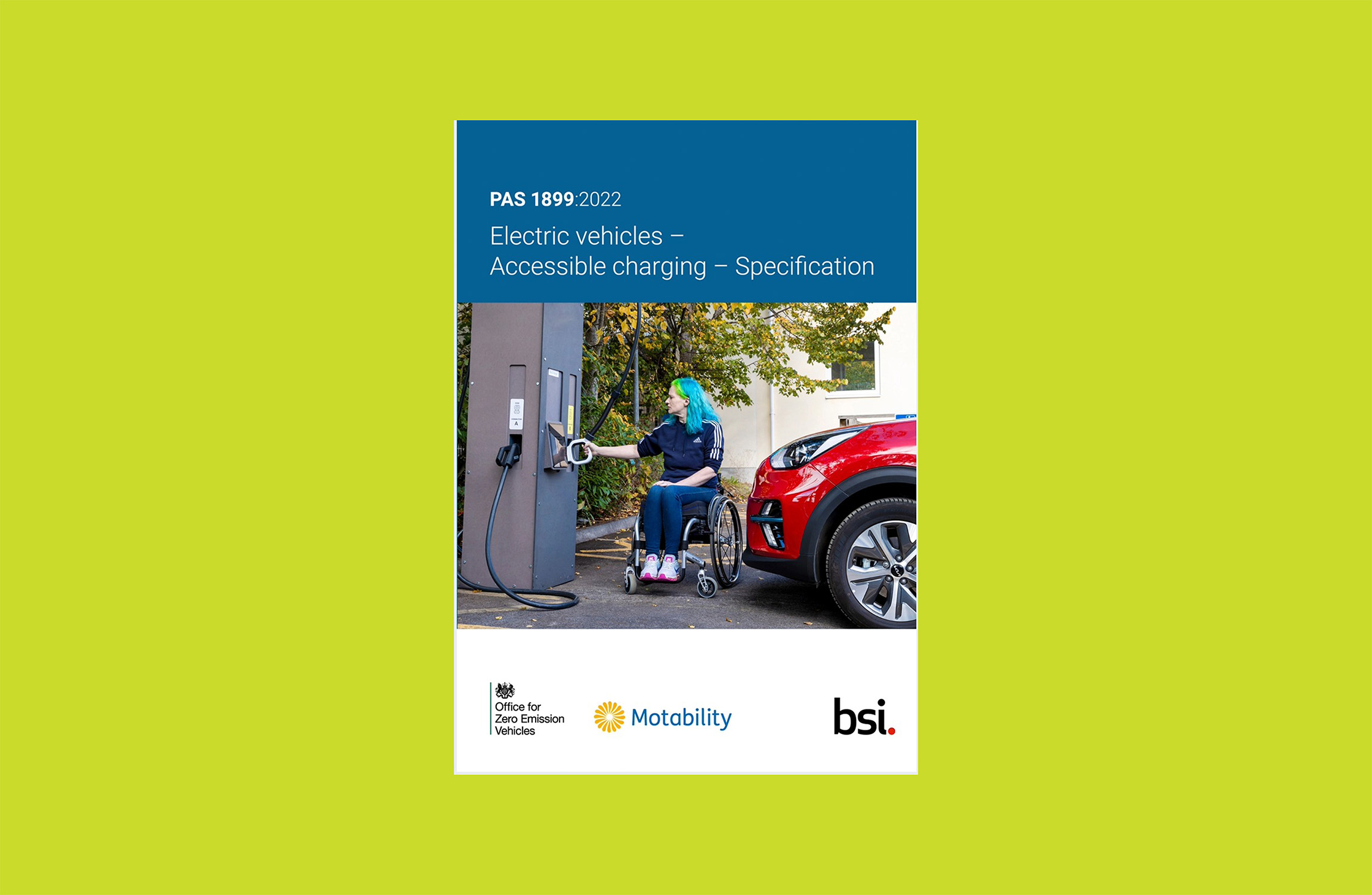
PAS 1899:2022 Front cover.

Why Accessibility in EV Charging Matters

EV chargers can be located in various environments; they are most commonly found in car parks, petrol station forecourts, and busy urban areas, often utilising existing on-street parking spaces.

However, not all of the chargers are accessible to disabled drivers. One in five people in the UK lives with a disability. By 2035, there is expected to be around 2.7 million disabled drivers, with up to 50% of these being fully or partially reliant on the public charging network.

The Motability Foundation, the charitable organisation that oversees the Motability Scheme, identified a lack of accessibility across the UK’s electric vehicle (EV) charging infrastructure. They have partnered with the charity Designability, which has developed design guidance for manufacturers, installers, providers, and site owners of public electric vehicle (EV) charge point infrastructure to ensure accessibility for all users.

This guidance was informed by engagement with over 200 Motability Scheme members, ensuring it considers the lived experience of the public charging network.

The guidance is to support the BSI standard for accessible EV Charging, PAS 1899:2022,

The design guidance is split into three sections:

  • Signage and Information
  • Built Environment
  • Charging an Electric Vehicle

Signage and Information Guidance

Precise and reliable information is essential when planning a journey. Access to up-to-date information about the charging network is a key part of planning a journey with an EV. For disabled users, this is particularly important; uncertainty about accessibility can be a significant barrier to accessing the public charging network.

The design guidance emphasises the provision of accurate information about charging points. This should not be limited to just the charging speed, connector type, cost and availability, which are currently widely used. But also accessibility-specific information, such as parking space size, space around the vehicle, charger position, level access, and any nearby amenities.

Onsite signage is also key and should clearly display where the chargers are located, any charging restrictions, time limits, and more. The signage should be placed where it does not create an obstruction and ideally in a place where it is readable from both seated and standing positions, without the need to leave the vehicle.

Disabled man charging an electric car with an EV charger.
Hand taking out an EV charger plug.

The Charging Process and Usability

The charging process itself must be usable by people with disabilities and account for a wide range of disabilities, including physical, sensory, and cognitive.

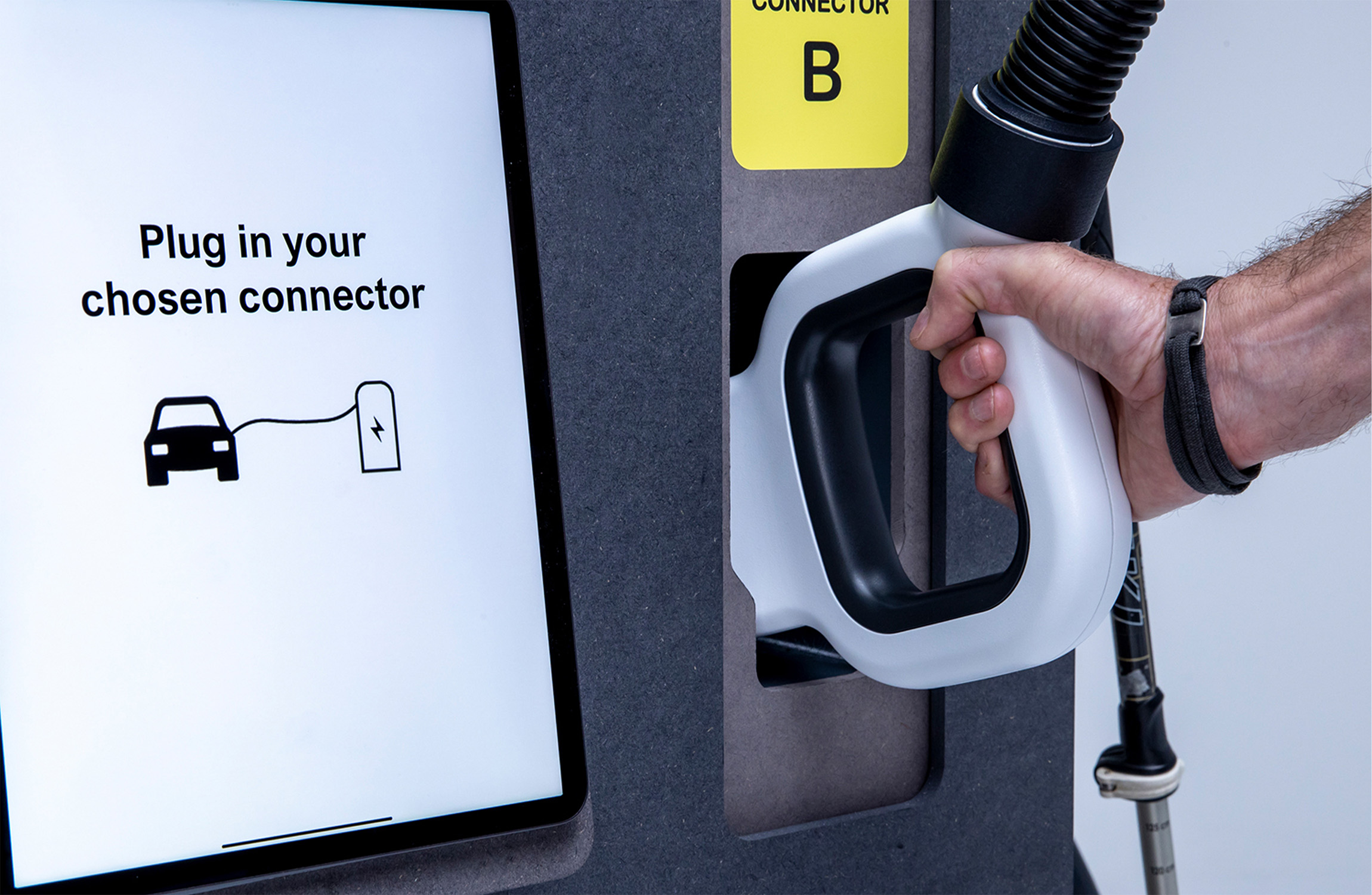
All parts of the charging unit, including screens, buttons, payment, and cables, should be visible and reachable from both standing and seated positions. The units should also be designed with visually impaired users in mind, ensuring clear labelling, good contrast, and appropriate screen height/tilt.

The guidance states that reaching a component does not guarantee it can be used, and that minimising strength, grip, and dexterity requirements helps ensure the unit is accessible. Design solutions should aim to reduce unnecessary cable weight and allow connectors to be held and operated in multiple ways, including one-handed use.

The steps needed to start, stop and pay for charging should be as few as possible. Systems should not rely on smartphone apps alone and should provide alternative ways to pay, such as contactless payment. Users should also be given enough time to complete each step without the unit ‘timing out’. Visual, audible and written cues should also be provided throughout the charging process.

The Role of Road Safety Audits in EV Charging Infrastructure

The Road Safety Audit generally limits us to only assessing any problems that could result in injuries. We may find issues such as trailing charging leads becoming a trip hazard, level access to the vehicle for mobility impaired users or improper placement of the charger itself which could result in collisions.

Although generally Road Safety Audits are only carried out on the public highway, it is important to note that these issues remain the same even when installed on private property, such as car parks.

We have seen an increase in the need for Road Safety Audits on EV chargers over the past few years. This can only be a good thing as improper installation of chargers could result in injuries to both pedestrians and potentially vehicle occupants.

Disabled woman taking out the charger plug from an EV charger.

Conclusion

As electric vehicles become increasingly mainstream, ensuring the charging infrastructure is accessible to all users is essential and the industry should prioritise inclusive design from the outset.

Matt Ford, Designability’s Director of Design & Innovation, sums up the guidance by saying:

“As EV charging infrastructure expands, accessibility and safety must go hand in hand. Our guidance, informed by the lived experience of disabled drivers, supports PAS 1899 and goes beyond compliance to help the road safety industry design and assess EV chargers that are not only safe, but genuinely usable for everyone.”

Richard Cook, Director at TMS Consultancy, has this to say on the guidance:

“At TMS, we recognise that conducting a Road Safety Audit of an EV charger is only one part of creating accessible infrastructure. While our audits focus on safety and injury prevention, the wider design considerations outlined in this guidance are equally important for creating a charging network that works for all users.”

If you would like more information on the accessibility guidance, contact details for Designability can be found on their website.

Why Commission a Road Safety Audit for EV Charging Infrastructure?

  • Independent Road Safety Audits
  • Compliance with DMRB GG 119
  • Identification of injury risk to pedestrians and vulnerable users
  • Experience auditing urban, forecourt and on-street charging environments
  • Practical, cost-effective mitigation recommendations

If you are planning or installing EV charging infrastructure on the public highway or within a development, our team can provide independent Road Safety Audit services aligned with national standards.

FAQ

Do EV charging points require a Road Safety Audit?

It depends on where the charging point will be located, if it is located in an area which may be a potential hazard to pedestrians or vehicles then a Road Safety Audit may be required. If you are unsure, it is best to check with the Local Highway Authority and they will be able to inform you.

Are EV chargers on private land subject to Road Safety Audit?

Although it may not be essential to get a Road Safety Audit on an EV charger on private land, it can be a good idea. A Road Safety Audit will help you ensure that where you plan to locate the unit is safe and will not pose a risk of injury to pedestrians or vehicles. Within a Road Safety Audit Report we would make recommendations to reduce the risk of any potential injury to risk to pedestrians or vehicle occupants.

What stage of design should EV chargers be audited?

A Road Safety Audit would generally be carried out at either preliminary design or detailed design stage, an RSA Stage 1 or combined 1&2. An Road Safety Audit may also be carried out post construction, or what is known as a Stage 3 Road Safety Audits.

What are common safety issues with EV charge points?

Some common safety issues we may find include; trailing charging leads becoming a trip hazard, level access to the vehicle for mobility impaired users or improper placement of the charger itself which could result in collisions.

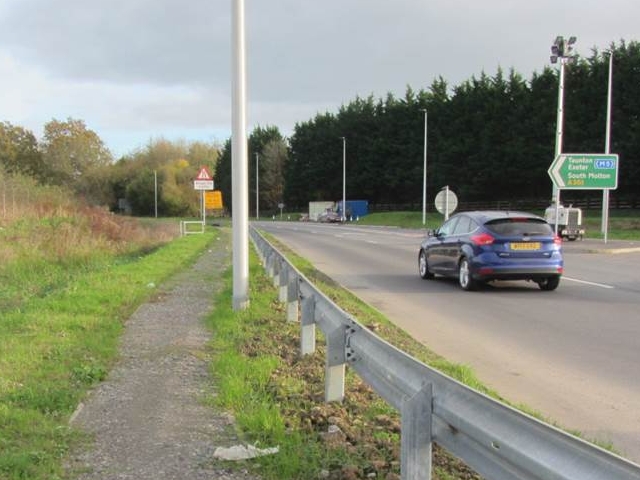
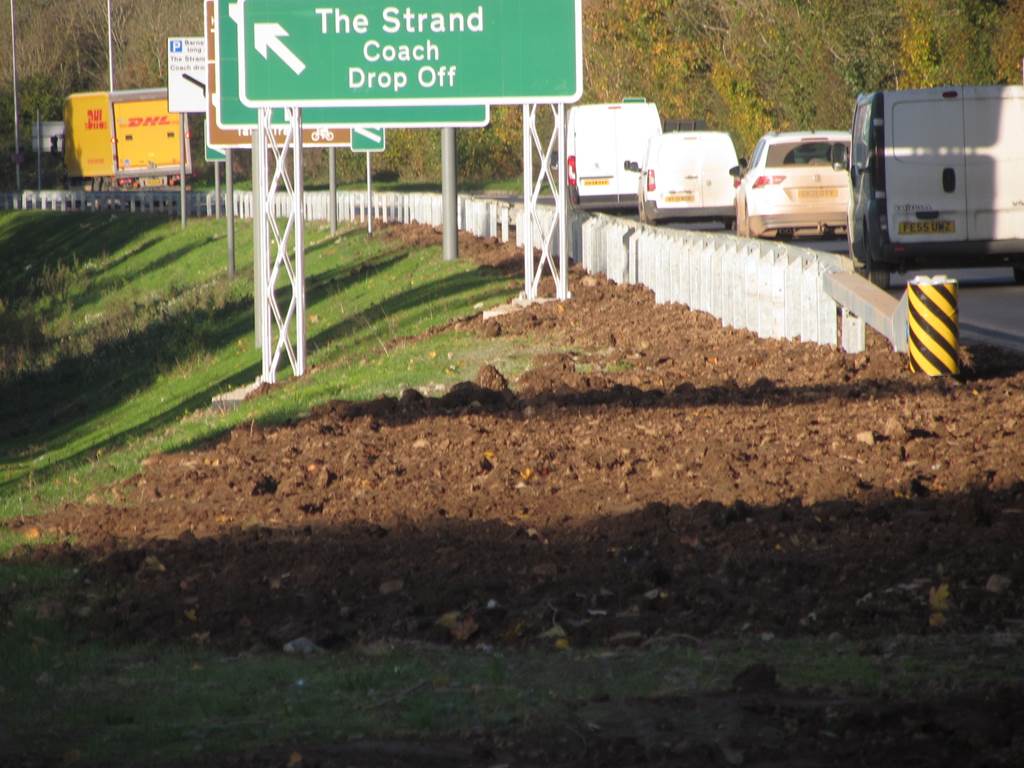
Delivering Road Safety Audits for the A361 North Devon Link Road

Delivering Road Safety Audits for the A361 North Devon Link Road

Overview of the Road Safety Audits we carried out

TMS Consultancy has been involved in the A361 North Devon Link Road highway improvement scheme since June 2023, delivering both Stage 2 Detailed Design Road Safety Audits and Stage 3 Post-Construction Road Safety Audits.


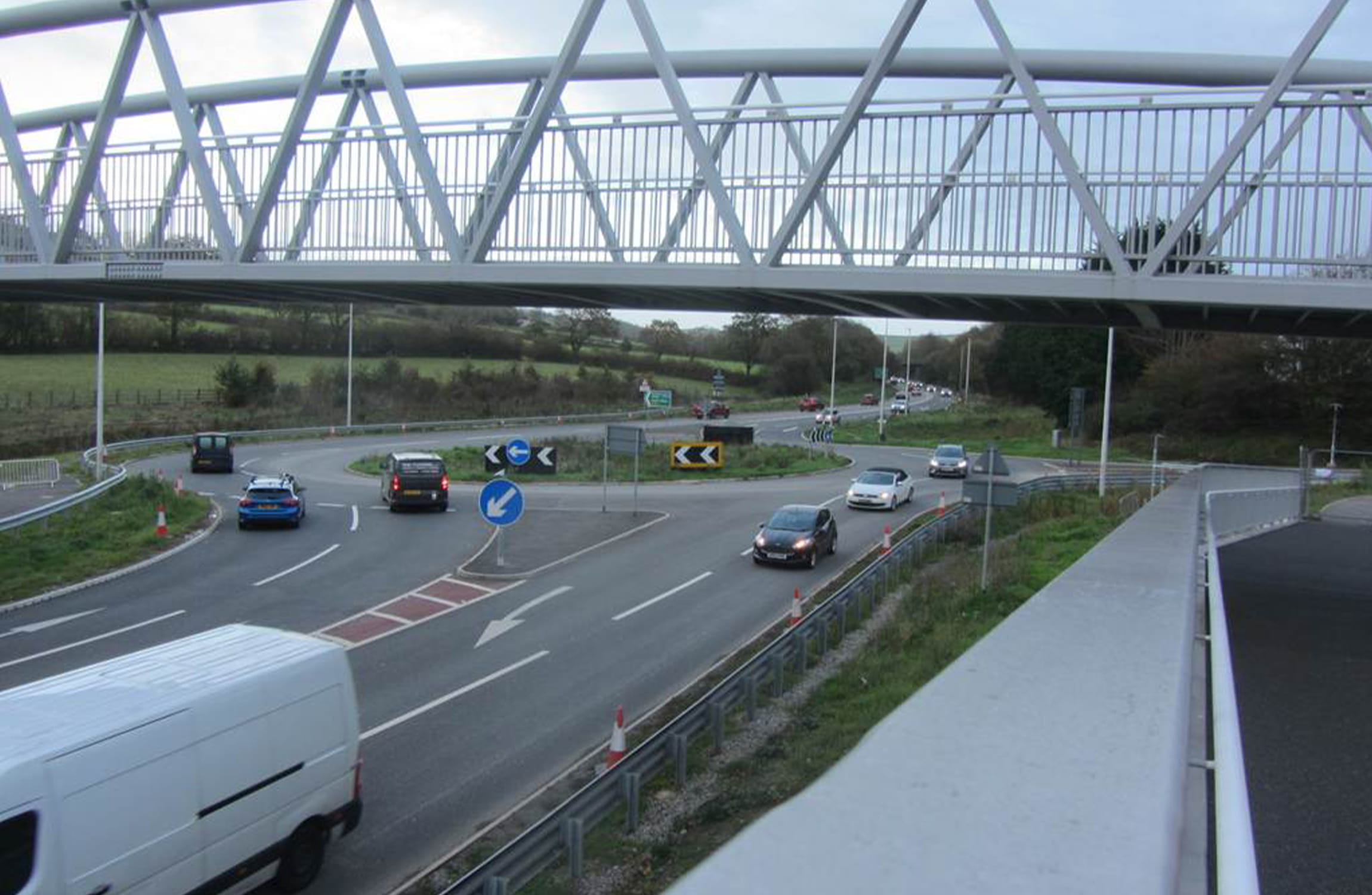
North Devon Link Road, Bridge and Roundabout.

Introduction

The A361 North Devon Link Road connects North Devon and North Cornwall to the M5 motorway and the rest of the UK, acting as a crucial economic lifeline. Key objectives of the project include enhancing road safety, increasing traffic capacity, supporting regional economic growth and improving journey time reliability. The scheme focused on upgrading a 10-mile section of the route between South Molton and Barnstaple.
The works included the construction of new 2+1 wide single carriageway sections, a new grade-separated junction, two new roundabouts, improvements to existing priority junctions, and the creation of new pedestrian and cycle routes.

During the phased design and construction periods, TMS carried out over 20 Road Safety Audits. Our engineers undertook detailed inspections and assessments covering a wide range of safety-critical elements, some of which are highlighted below.

Safety-Critical Elements

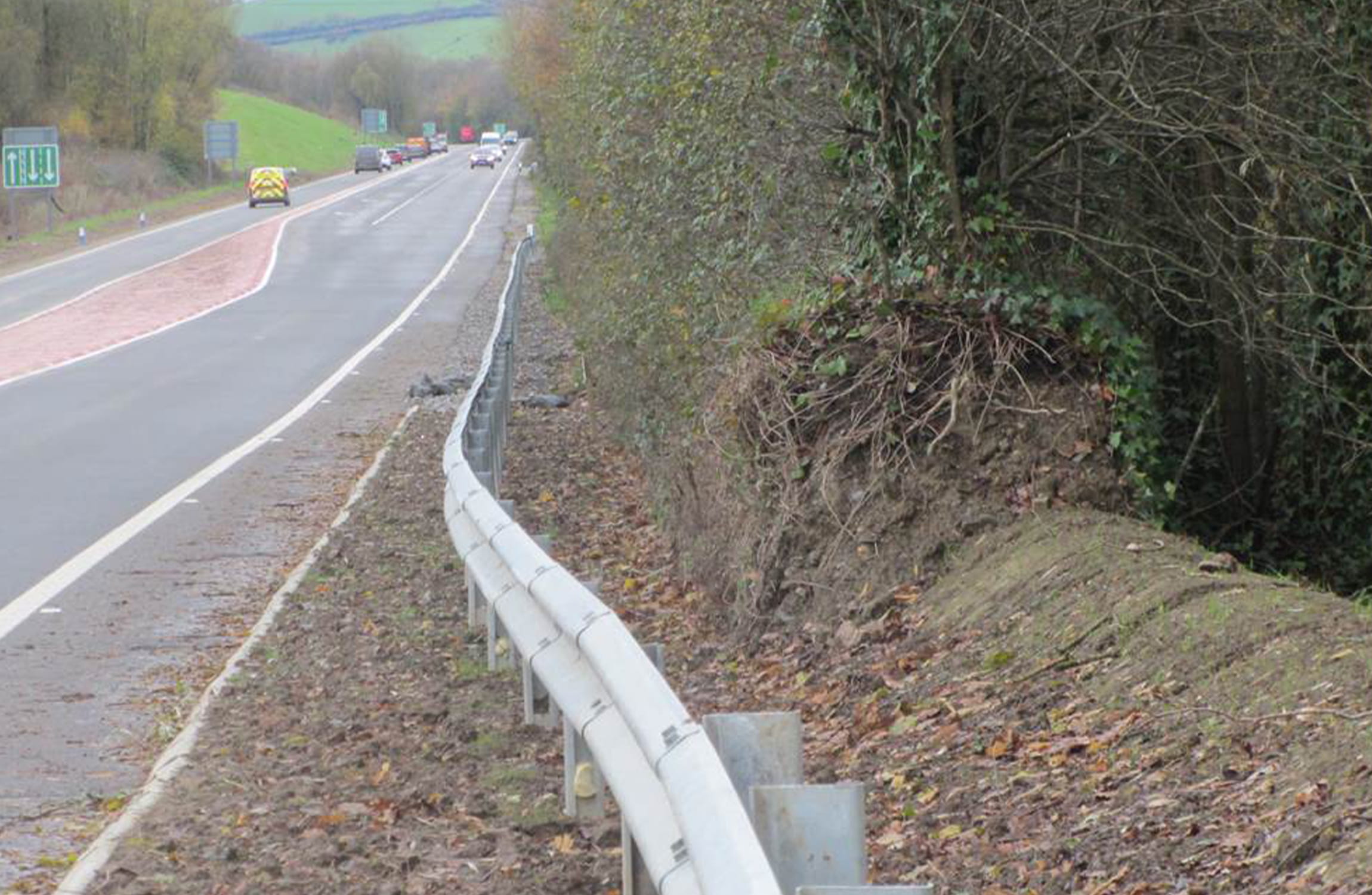
Roadside features such as embankments, cutting slopes, drainage ditches and headwalls, to reduce the risk of vehicle rollover incidents. Rigid and heavy-duty items within verges, including signposts, lighting columns, trees, dense vegetation and telecommunications equipment, to minimise the risk of high-severity impact injuries.

Road Restraint Systems, ensuring they were correctly specified, located and installed to safely contain vehicles and redirect them away from roadside hazards.

Boundary fencing design, to reduce the risk of “spearing-type” injuries.

Signs, road markings and reflective studs, to ensure they were clearly visible, legible and correctly positioned to support safe driver navigation.

Street lighting provision, with particular focus on achieving appropriate uniformity at conflict points such as junctions and pedestrian crossing locations.

Skid resistance of the road surface, especially on approaches to bends, junctions and other higher-risk areas.

Visibility splays and stopping sight distances, ensuring compliance with design standards and suitability for the operating environment.

Pedestrian and cycle routes, reviewing surfacing, signing and lining to ensure safe and intuitive use.

Road Safety Audit on the Devon Link Road

What Our Road Safety Auditors Said

TMS engineers involved in the project, Hammy Aulak, Richard Marriott and Mike Fuller, commented:

“We were delighted to be involved in this significant infrastructure project. Our role allowed us to apply our expertise to help deliver a safer road for all users, while also enabling us to build on our knowledge of emerging technologies and best practice associated with large-scale highway schemes.”

A few more Road Safety Audits are planned to complete outstanding remedial works on certain project elements, with completion expected in early 2026.

Conclusion

Road Safety Audits remain a critical component of the highway design and delivery process, ensuring that schemes are safe, compliant and fit for purpose before opening to traffic. As demonstrated through this project, a structured audit undertaken in line with GG 119 enables potential safety risks to be identified early, supporting informed decision-making and helping designers, developers and highway authorities meet their statutory obligations.

For housebuilders, civil engineering consultancies and transport planners, engaging an experienced audit team adds value beyond compliance alone. Independent review, clear recommendations and a collaborative approach help reduce risk, minimise costly design changes later in the programme and contribute to safer outcomes for all road users.

If you would like to understand how a Road Safety Audit could support your scheme — whether at feasibility, detailed design or post-construction stage

Do you need a Road Safety Audit for your highway scheme? Whether local or nationwide, please call us on +44 (0)24 7669 0900 or please email Lorna Styring . Alternatively, you can request a quote using the link below.

FAQ

What is a Road Safety Audit?

Road Safety Audit is a systematic process for checking the road safety implications of highway improvements and new road schemes. The objective of the process is to minimise future road collision occurrence and severity once the scheme has been built and the road comes into use.

The audit takes into account all road users, particularly vulnerable users such as pedestrians and pedal cyclists. Having identified potential road safety problems, the audit then makes practical recommendations for improvement.

With these safety objectives in mind, the auditors need to ask the question “Who can be hurt here, and in what way?”

Why is auditor independence important in a Road Safety Audit?

Independence ensures the audit is objective and free from design bias, providing unbiased safety recommendations that highway authorities and developers can trust. Independent audit teams are a key requirement in GG 119, find out how we ensure our audit teams independence at TMS.

What happens after a Road Safety Audit is completed?

Following the audit, the design team prepares a formal response, often called a Designers Response, to each recommendation, outlining how issues will be addressed or providing justification where recommendations are not accepted. This audit response process ensures transparency and accountability.

St Mary’s Axe, City of London

St Mary's Axe, City of London

TMS recently conducted a Stage 1 Road Safety Audit associated with a temporary traffic management scheme on St Mary’s Axe in the City of London. The aims of the scheme were to minimise the impact of construction traffic associated with the redevelopment of 1 Undershaft (also known as St Helen’s Tower).

Located opposite 30 St Mary’s Axe (more commonly known as The Gherkin), the redevelopment, which includes the demolition of the existing St Helen’s Tower, would provide a new landmark tower in the City of London. Upon completion, the building will be the tallest in the City of London and the joint tallest in Western Europe, matching the height of the Shard. According to the architects, 1 Undershaft will also provide Europe’s highest publicly accessible viewing gallery and a ‘world-leading’ educational space curated by the London Museum. The development also includes enhanced public realm and a free-to-access public garden on the 11th floor of the building. A new public square featuring outdoor seating amongst trees and planting will also be provided.

The Works

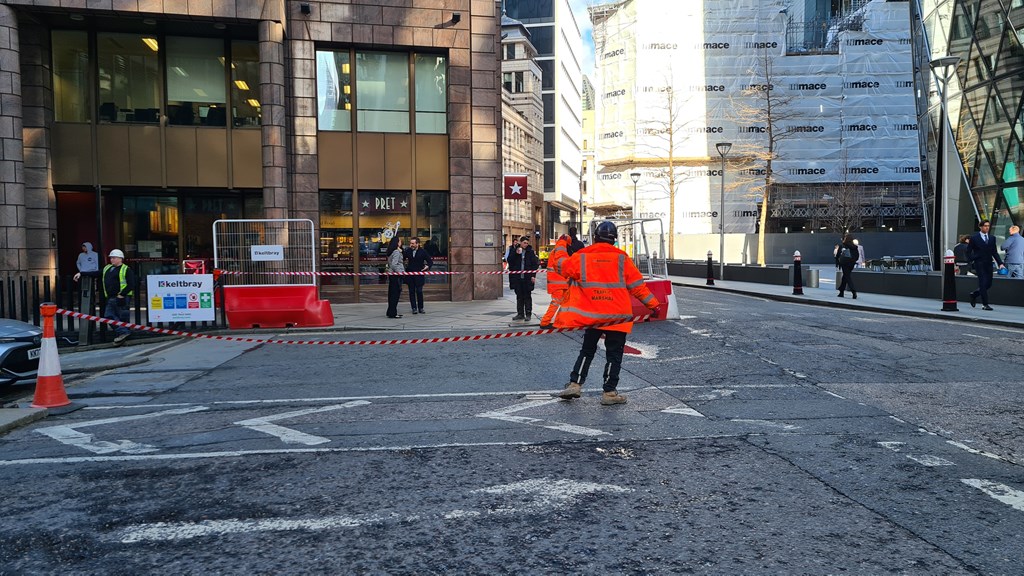
The audited proposals comprised the closure of the existing footway on the southern side of Undershaft and the provision of a pedestrian diversionary route to the north of Undershaft. An alternative diversionary route was also proposed, passing between The Leadenhall Building and the construction site. Amendments to existing on-street motorcycle parking bays were also proposed, accommodating construction access into the site from St Mary’s Axe.

Vehicle activity in and out of the three gates into the site would be managed by marshals with concertina barriers, controlling pedestrian movement across the openings.

St Mary's Axe Temporary Traffic Management.
Stage 1 Road Safety Audit

At the time of our commission, the works had commenced with the area around St Helen’s Tower fenced off and the temporary pedestrian diversions were in place. Marshals were controlling pedestrian movement across the existing underground car park access during vehicle movements.


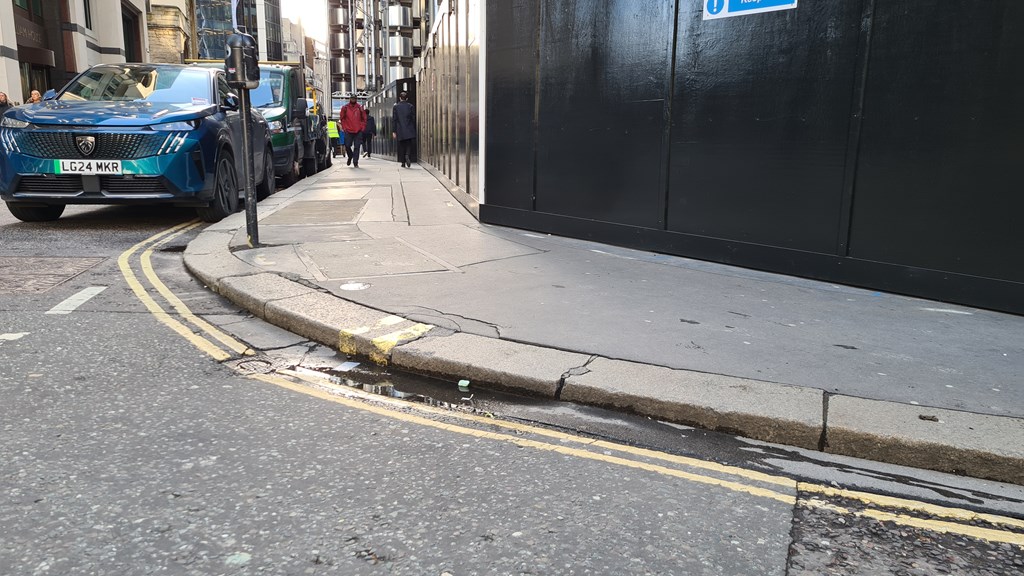
Following an assessment of the existing highway environment in context with the proposals, the Audit Team recommended that a temporary ramp be provided at the transition between the existing footway on St Mary’s Axe and the carriageway. Due to the temporary closure of the southern footway on Undershaft, pedestrians would be required to negotiate a full height kerb to access the diversionary route.

It was also recommended that additional temporary signage was installed to provide pedestrians with clear directions around the closures, with signage located so that it did not impede movement.

St Mary's Axe kerb with ponding.

If you have a scheme of this nature that requires a Road Safety Audit, then please call us on +44 (0)24 7669 0900 or alternatively please email Lorna Styring or request a quote using the link below.

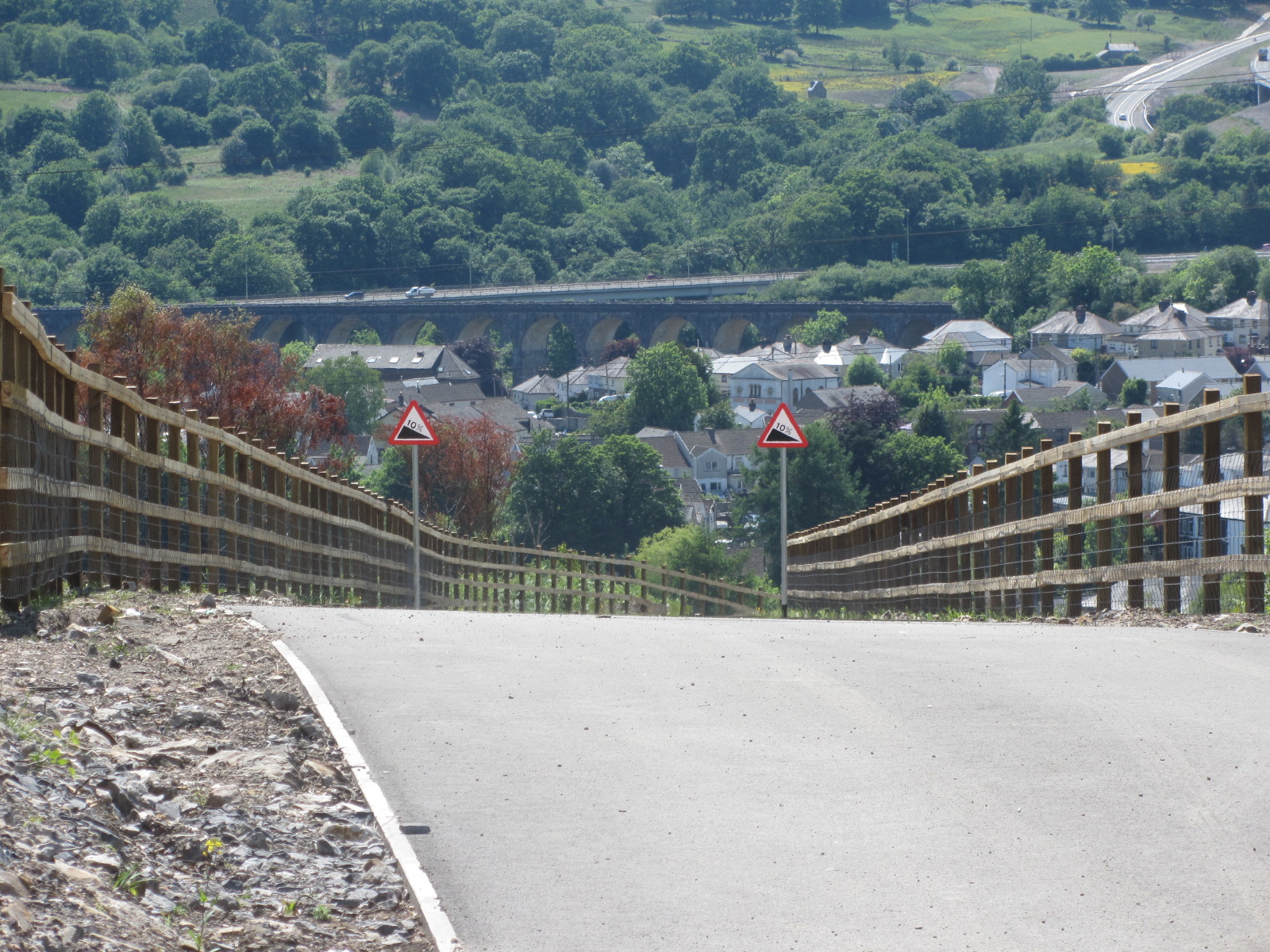
Heads of the Valleys Road Upgrade Officially Opens after two decades

Heads of the Valleys Road Upgrade Officially Opens after two decades

Over the last 12 months, TMS Engineers Harminder Aulak, Lee Williams and Mike Fuller have been busy carrying out Stage 3 Road Safety Audits on the last section of the A465 Heads of the Valleys project in South Wales. The 11mile (17.7km) section of brand new dual carriageway runs from Hirwaun to Dowlais Top and replaces the existing single carriageway road. TMS are extremely proud to have been involved in this project.

The final phase of the £2 billion Heads of the Valleys Road upgrade programme has now officially opened, marking the end of the project. The Welsh Government said it marked the completion of “one of the UK’s largest and most technically challenging road projects”. The £1.4 billion Section 5 and 6 Dowlais to Hirwaun final phase links the Valleys, South and West Wales to the English Midlands and beyond.

This has been one of the largest road safety projects TMS has been involved with in recent years. Since the summer of 2024, we have carried out 41 separate visits and produced 53 reports.  The process involved walking the majority of the new roads before they were fully opened to traffic and we estimate that our Engineers have walked a staggering 50km along the mainline, grade separated junctions and side roads. Good for the daily step count!

Heads of the valley bridge

The programme was demanding due to the short time frames and deadlines to produce the audit reports before the “Permits to Use” were issued to the Contractor (as part of the phased opening).  Though challenging, TMS delivered in terms of arranging the audits (with the Contractor, Welsh Government Representatives, South Wales Police and Local Highway Authorities), inspecting the sites in both daylight and night-time conditions and producing the Stage 3 reports.

It was very satisfying to see that the vast majority of our recommendations to improve road safety and reduce the risk of future collisions were carried out promptly by the contractor. Many of the recommendations involved lower cost measures, such as improving roadside protection, ensuring street furniture was forgiving in the event of a collision (passively safe), road signs, markings and reflective studs provided optimum performance and facilities for pedestrians, cyclists and equestrians were safe to use.

We are confident that many of our recommended measures would produce a high economic rate of return in terms of collision savings, especially when fatal and serious casualties are taken into account. It is rewarding that we have played a part in ensuring the new road is as safe as possible as people travel smoothly and efficiently along the new road.

Over the time we worked on this project, our auditors built excellent relationships with our client, the Police and various other third parties. It was a pleasure working with all that were involved with this prestigious project. Andrew Carter from South Wales Police kindly provided the following testimonial.

Heads of the valley road

Andrew Carter – South Wales Police 

“The A465 Heads of the Valley Scheme was the largest civil engineering scheme to have been undertaken in Wales for well over thirty years. TMS were commissioned to carry out Stage 3 Road Safety Audits for the entire scheme with the lead auditor being Hammy Aulak and his colleague Lee Williams.

From the very start of the 40 plus audits completed on the scheme, the SWP Traffic Management Unit struck a good working relationship with both Hammy and Lee, and the combination of design knowledge and required specifications, coupled with over fifty years’ experience of the SWP officers, in relation to collision investigation and road user behaviour, in my opinion made a formidable partnership.

As a team I believe we identified some unique methods to offset any potential safety issues, which in fairness were rectified by the construction company and implemented quickly. Hammy was always prepared to look at any potential safety issues identified by myself and my colleague Ian Stephen and include them in his reports. We also found the expertise of both Hammy and Lee very helpful and their depth of knowledge and will be included in our annual PDR’s.

I firmly believe that what has been constructed is probably one of the best and safest sections of carriageway in Wales thanks to TMS with input from ourselves. I wouldn’t hesitate to recommend TMS for any future schemes, and it was a pleasure and enjoyable learning curve for the SWP Team.”

Watch the video below to join our engineers on-site to see the work that goes into our Road Safety Audits.

If you have a scheme of this nature that requires a Road Safety Audit, then please call us on +44 (0)24 7669 0900 or alternatively please email Lorna Styring or request a quote using the link below.

Back to top