Ensuring Accessible EV Charging: The Role of Design Guidance, PAS 1899 and Road Safety Audits
Overview
With the ever-growing number of EV sales and their use on UK roads, the charging infrastructure supporting them has also grown. At TMS, we have conducted Road Safety Audits at several charging locations, generally in busy urban areas.
In this article, our director, Richard Cook, takes us through the guidance and standard which is in place to ensure that the charging infrastructure is accessible for disabled drivers.
Why Accessibility in EV Charging Matters
EV chargers can be located in various environments; they are most commonly found in car parks, petrol station forecourts, and busy urban areas, often utilising existing on-street parking spaces.
However, not all of the chargers are accessible to disabled drivers. One in five people in the UK lives with a disability. By 2035, there is expected to be around 2.7 million disabled drivers, with up to 50% of these being fully or partially reliant on the public charging network.
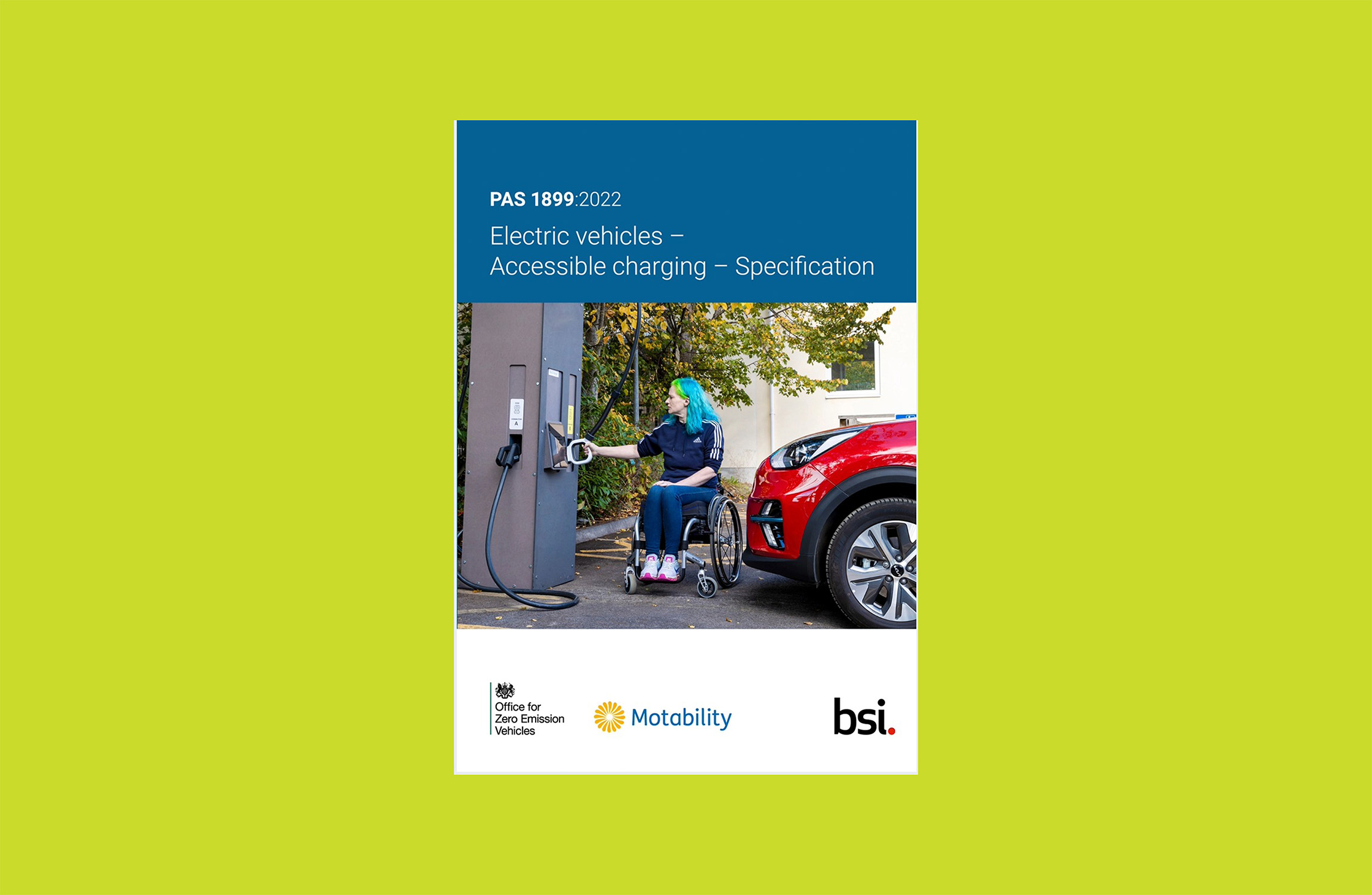
The Motability Foundation, the charitable organisation that oversees the Motability Scheme, identified a lack of accessibility across the UK’s electric vehicle (EV) charging infrastructure. They have partnered with the charity Designability, which has developed design guidance for manufacturers, installers, providers, and site owners of public electric vehicle (EV) charge point infrastructure to ensure accessibility for all users.
This guidance was informed by engagement with over 200 Motability Scheme members, ensuring it considers the lived experience of the public charging network.
The guidance is to support the BSI standard for accessible EV Charging, PAS 1899:2022,
The design guidance is split into three sections:
- Signage and Information
- Built Environment
- Charging an Electric Vehicle
Signage and Information Guidance
Precise and reliable information is essential when planning a journey. Access to up-to-date information about the charging network is a key part of planning a journey with an EV. For disabled users, this is particularly important; uncertainty about accessibility can be a significant barrier to accessing the public charging network.
The design guidance emphasises the provision of accurate information about charging points. This should not be limited to just the charging speed, connector type, cost and availability, which are currently widely used. But also accessibility-specific information, such as parking space size, space around the vehicle, charger position, level access, and any nearby amenities.
Onsite signage is also key and should clearly display where the chargers are located, any charging restrictions, time limits, and more. The signage should be placed where it does not create an obstruction and ideally in a place where it is readable from both seated and standing positions, without the need to leave the vehicle.
The Charging Process and Usability
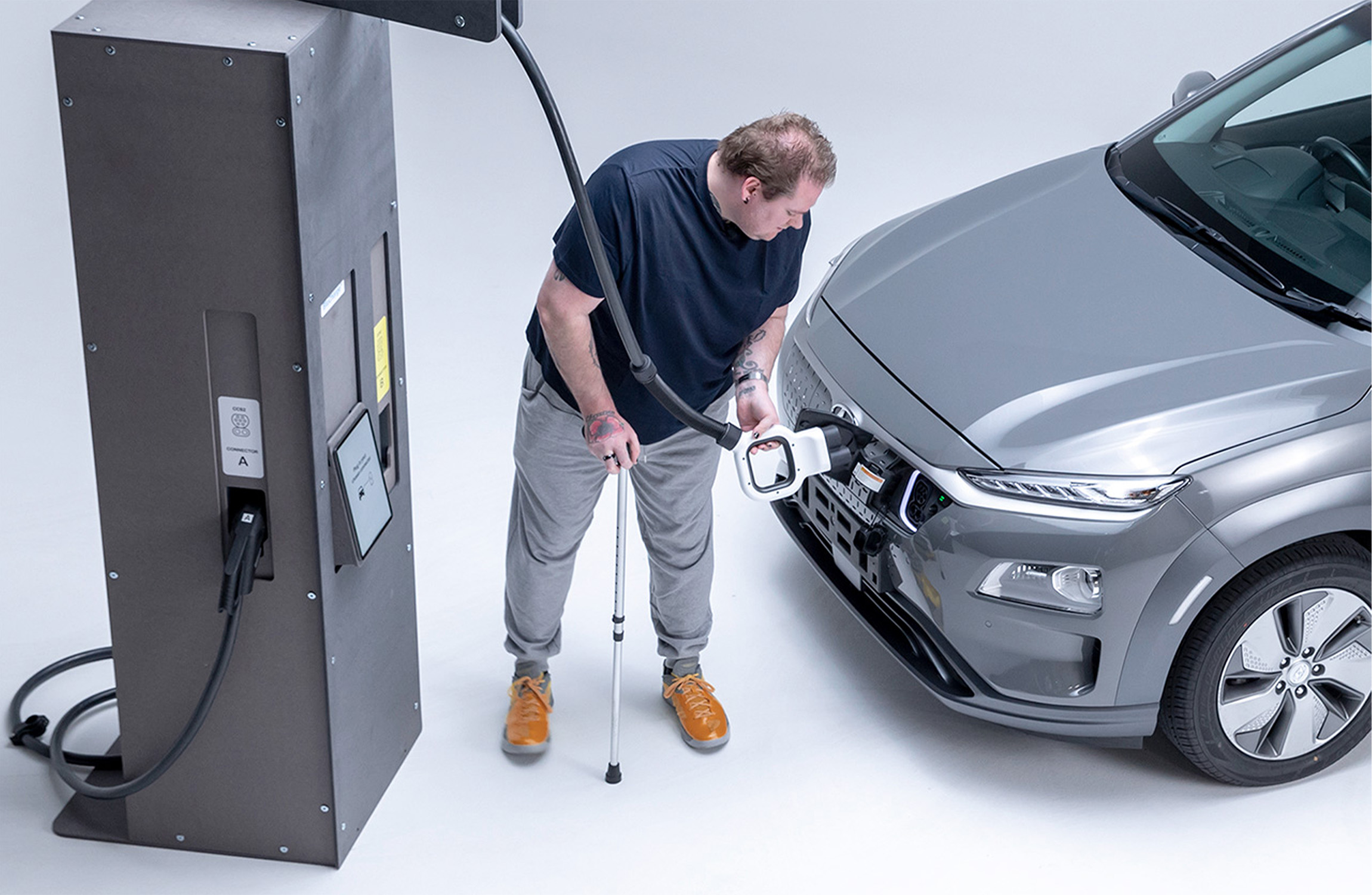
The charging process itself must be usable by people with disabilities and account for a wide range of disabilities, including physical, sensory, and cognitive.
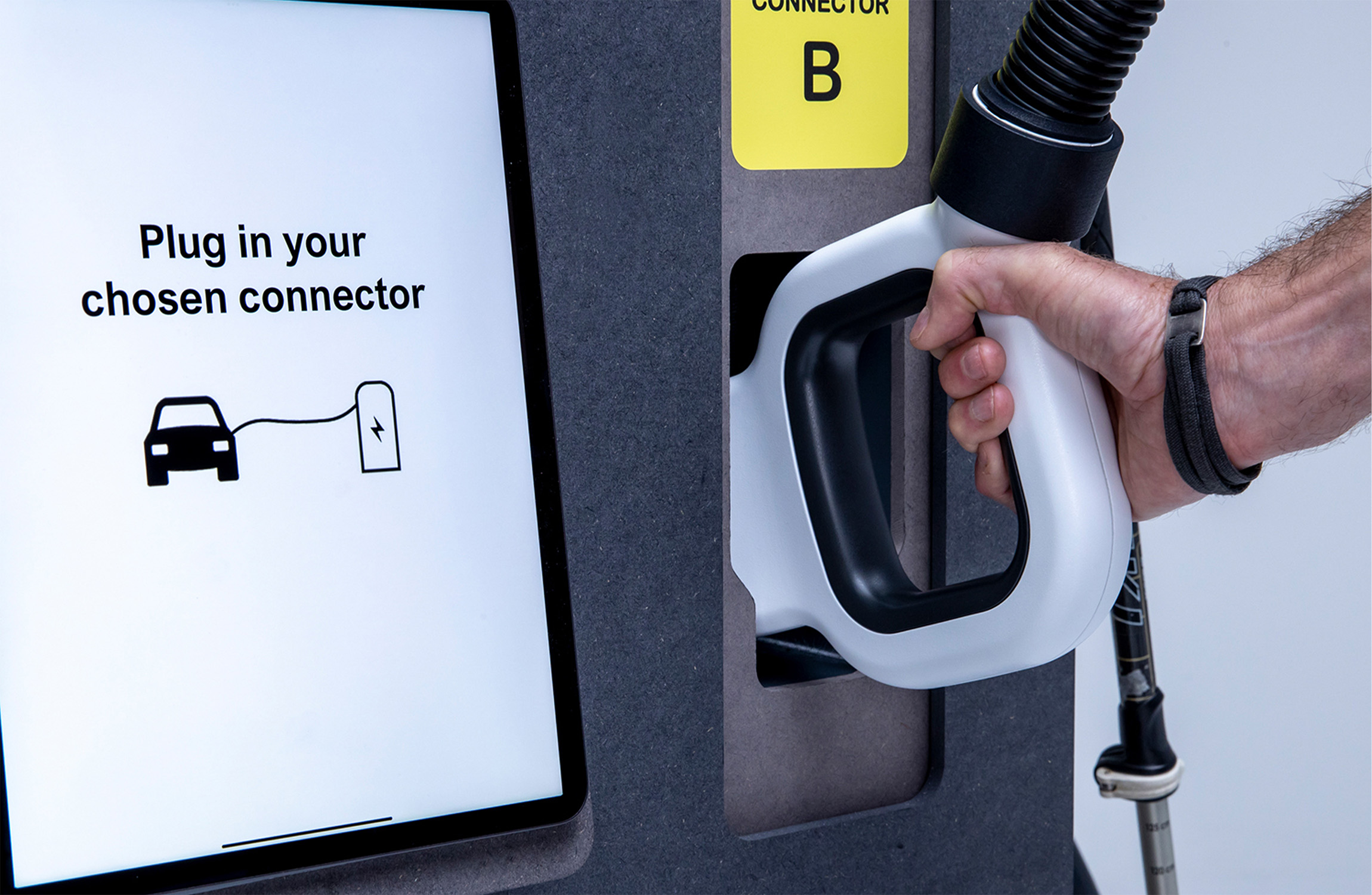
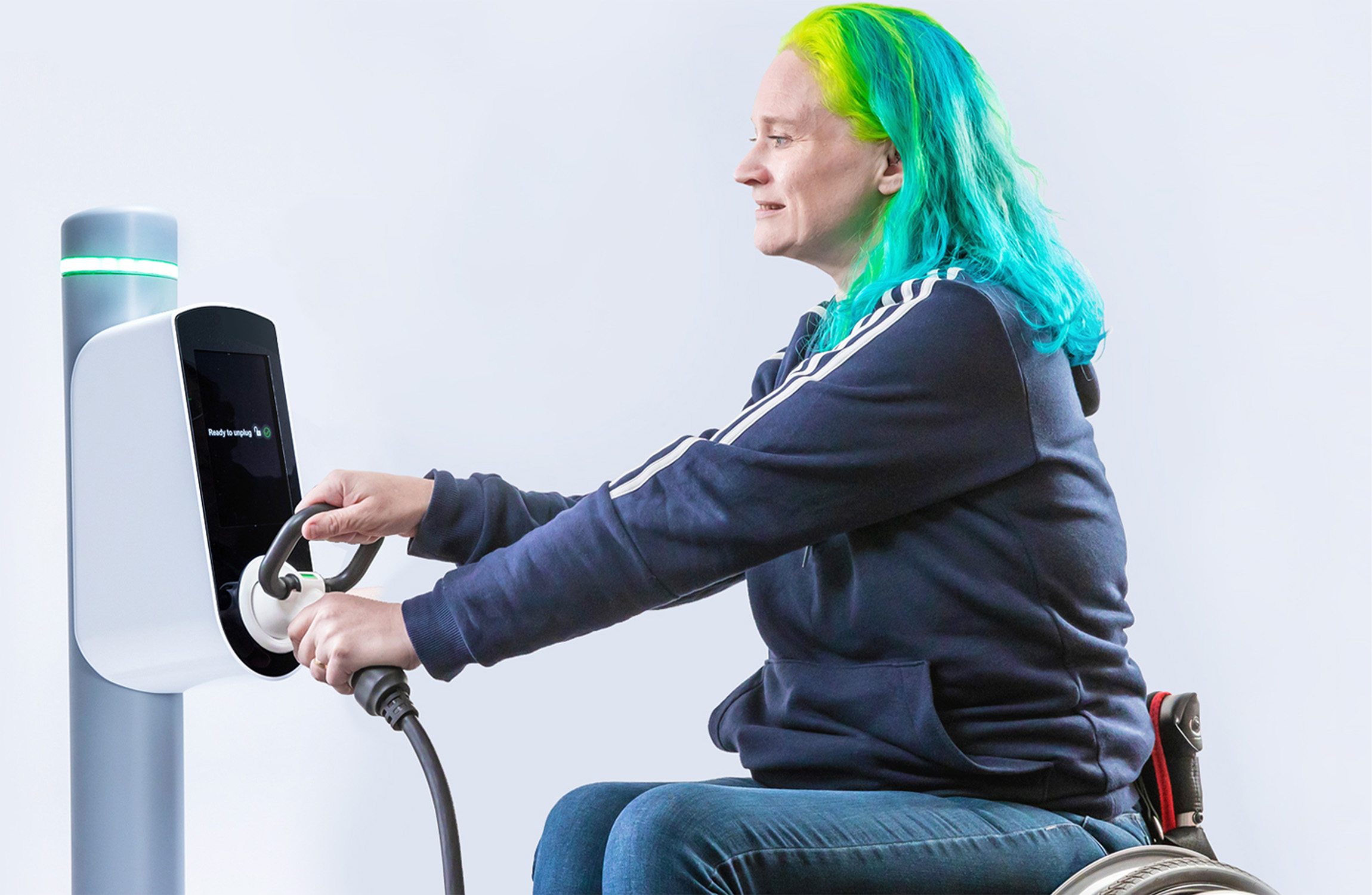
All parts of the charging unit, including screens, buttons, payment, and cables, should be visible and reachable from both standing and seated positions. The units should also be designed with visually impaired users in mind, ensuring clear labelling, good contrast, and appropriate screen height/tilt.
The guidance states that reaching a component does not guarantee it can be used, and that minimising strength, grip, and dexterity requirements helps ensure the unit is accessible. Design solutions should aim to reduce unnecessary cable weight and allow connectors to be held and operated in multiple ways, including one-handed use.
The steps needed to start, stop and pay for charging should be as few as possible. Systems should not rely on smartphone apps alone and should provide alternative ways to pay, such as contactless payment. Users should also be given enough time to complete each step without the unit ‘timing out’. Visual, audible and written cues should also be provided throughout the charging process.
The Role of Road Safety Audits in EV Charging Infrastructure
The Road Safety Audit generally limits us to only assessing any problems that could result in injuries. We may find issues such as trailing charging leads becoming a trip hazard, level access to the vehicle for mobility impaired users or improper placement of the charger itself which could result in collisions.
Although generally Road Safety Audits are only carried out on the public highway, it is important to note that these issues remain the same even when installed on private property, such as car parks.
We have seen an increase in the need for Road Safety Audits on EV chargers over the past few years. This can only be a good thing as improper installation of chargers could result in injuries to both pedestrians and potentially vehicle occupants.
Conclusion
As electric vehicles become increasingly mainstream, ensuring the charging infrastructure is accessible to all users is essential and the industry should prioritise inclusive design from the outset.
Matt Ford, Designability’s Director of Design & Innovation, sums up the guidance by saying:
“As EV charging infrastructure expands, accessibility and safety must go hand in hand. Our guidance, informed by the lived experience of disabled drivers, supports PAS 1899 and goes beyond compliance to help the road safety industry design and assess EV chargers that are not only safe, but genuinely usable for everyone.”
Richard Cook, Director at TMS Consultancy, has this to say on the guidance:
“At TMS, we recognise that conducting a Road Safety Audit of an EV charger is only one part of creating accessible infrastructure. While our audits focus on safety and injury prevention, the wider design considerations outlined in this guidance are equally important for creating a charging network that works for all users.”
If you would like more information on the accessibility guidance, contact details for Designability can be found on their website.
Why Commission a Road Safety Audit for EV Charging Infrastructure?
- Independent Road Safety Audits
- Compliance with DMRB GG 119
- Identification of injury risk to pedestrians and vulnerable users
- Experience auditing urban, forecourt and on-street charging environments
- Practical, cost-effective mitigation recommendations
If you are planning or installing EV charging infrastructure on the public highway or within a development, our team can provide independent Road Safety Audit services aligned with national standards.
FAQ
Do EV charging points require a Road Safety Audit?
It depends on where the charging point will be located, if it is located in an area which may be a potential hazard to pedestrians or vehicles then a Road Safety Audit may be required. If you are unsure, it is best to check with the Local Highway Authority and they will be able to inform you.
Are EV chargers on private land subject to Road Safety Audit?
Although it may not be essential to get a Road Safety Audit on an EV charger on private land, it can be a good idea. A Road Safety Audit will help you ensure that where you plan to locate the unit is safe and will not pose a risk of injury to pedestrians or vehicles. Within a Road Safety Audit Report we would make recommendations to reduce the risk of any potential injury to risk to pedestrians or vehicle occupants.
What stage of design should EV chargers be audited?
A Road Safety Audit would generally be carried out at either preliminary design or detailed design stage, an RSA Stage 1 or combined 1&2. An Road Safety Audit may also be carried out post construction, or what is known as a Stage 3 Road Safety Audits.
What are common safety issues with EV charge points?
Some common safety issues we may find include; trailing charging leads becoming a trip hazard, level access to the vehicle for mobility impaired users or improper placement of the charger itself which could result in collisions.