Passive Safety on Highway Schemes: An Auditor’s Perspective
Key Takeaways
- The 40 mph rule: The passive safety requirement threshold for all classifications of roads is 40 mph, not 50 mph, a common misconception in scheme design.
- Safe products can combine to create an unsafe system: Passively safe products that perform correctly in isolation may not function as intended when installed in close proximity to each other.
- VRS needs clear space, level ground, and the right terminals: Vehicle Restraint Systems (VRS) require sufficient working width, level ground behind the barrier, and correct terminal specification.
- Signpost compliance is about more than the post itself: Passively safe signposts should meet specific diameter and wall thickness thresholds, and post spacing should be sufficient to maintain passive safety classification.
- A shear-off post can become a projectile: Secondary collision risk, particularly to pedestrians, is a critical but often overlooked consideration when selecting passive safety products.
- The DMRB is not the whole picture: Relevant guidance sits primarily within British Standards BS EN 12767:2019+A1:2024 and best practice guidance, the principles of which are applied in the Design Manual for Roads and Bridges (DMRB).
Introduction
Passive safety is a fundamental consideration in the design and assessment of modern highway schemes. The principle is straightforward: in the event of an errant vehicle leaving the carriageway, the roadside environment should be designed to minimise the severity of the resulting collision. Passively safe products, from signposts and lamp columns to vehicle restraint systems, are engineered to absorb or redirect impact energy in a controlled way, rather than behaving as rigid, unyielding obstacles.
But specifying a passively safe product is only part of the picture. How that product is installed, what surrounds it, and how it interacts with the wider highway environment are equally important. These are the issues that our road safety auditors are trained to identify.
The Interaction Problem: When Two Safe Products Become One Unsafe System
One of the most important and frequently overlooked considerations in passive safety auditing is the interaction between individual products. A product may be certified as passively safe in its own right, but when installed in close proximity to another passively safe feature, the combined effect may not perform as intended by the manufacturer.
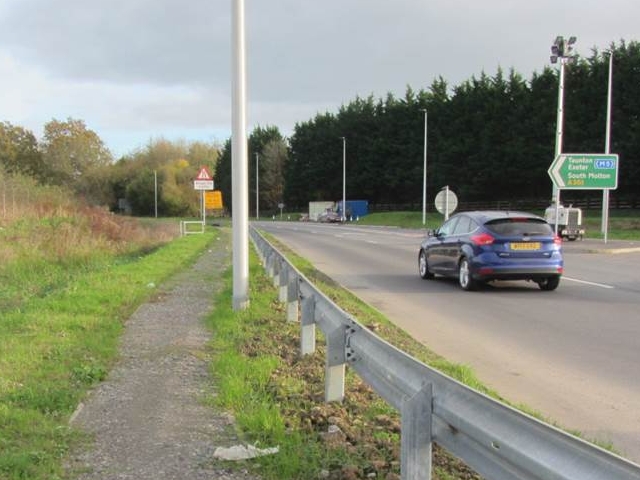
A common example is an Armco barrier with a general signpost located directly in front of it. Both products may meet passive safety requirements independently, but if a vehicle strikes the post, the presence of the barrier directly behind it could prevent the post from deforming and dissipating energy as it was designed to. The result could be a more severe outcome than if either product had been installed in isolation.
Vehicle Restraint Systems: Working Width, Terminations and Tie-Ins
Vehicle Restraint Systems (VRS), including safety barriers and parapets, require particular attention during a road safety audit. There are three specific areas auditors focus on:
1. Working Width
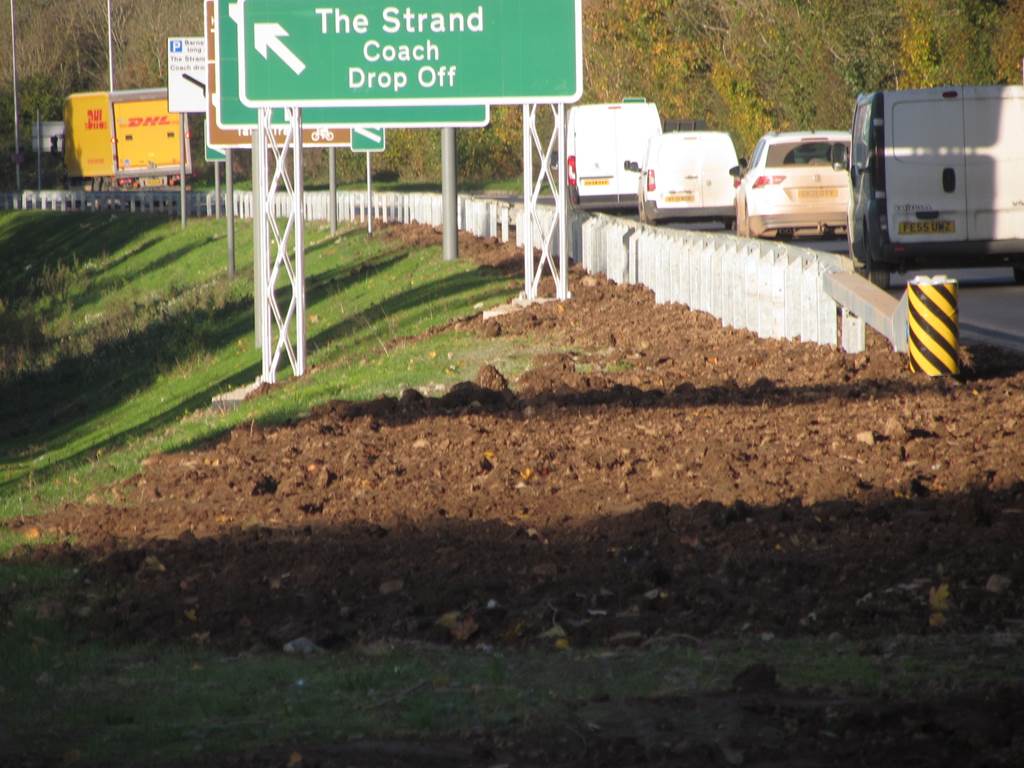
Every VRS has a defined working width: the lateral distance the barrier deflects upon impact. This space should be clear of obstructions, and the ground behind the barrier should be reasonably level. If the verge slopes away behind the barrier, a vehicle could become wedged beneath it or roll down the slope, significantly worsening the outcome. Working width requirements are generally determined by speed limit: higher-speed roads require greater working width, and auditors should verify that the installed product is appropriate for the prevailing speed environment.
2. Termination Points
The end terminals of a VRS run are a critical safety feature. An incorrectly specified terminal can act as a ramp, launching a vehicle upward on impact rather than absorbing the energy or cause vehicle spearing. Auditors look for appropriate terminal types, such as the P4 terminal, which is designed to compress on impact and prevent vehicle override. This is a detail that can easily be missed on a design review, but is clearly visible and verifiable on site.
3. Tie-In Points
Where a new VRS run connects to existing infrastructure, such as a bridge parapet, the transition should be carefully designed. Moving from a flexible, energy-absorbing barrier to a rigid structure creates the risk of ‘pocketing’, where a vehicle becomes trapped in the barrier during impact, causing sudden and severe deceleration. Auditors verify that tie-in terminals are present and correctly specified to ensure this transition is managed safely.
Passively Safe Signposts: Specification and Spacing
Passively safe signposts are defined by a combination of post diameter, wall thickness, and spacing, all of which should fall within specified limits for the structure to retain its passive safety classification. The relevant British Standard sets out maximum post sizes. For example, a 76 mm diameter steel post of a certain wall thickness may be classified as passively safe. In comparison, a larger 88 mm-diameter post may require a thinner wall thickness to achieve the same classification.
Critically, it is not sufficient to use a compliant post. The spacing between posts also matters. If posts are installed too closely together, the structure may no longer behave as a passively safe system, even if each post meets the specification.
Secondary Collisions: Protecting Vulnerable Road Users
A passively safe product is not always the right product for every location. One of the more nuanced judgements auditors should make is whether a low-energy-absorbing product, one that shears off completely on impact, is appropriate given its surroundings.
In a footway or pedestrianised area, a shear-off product might successfully prevent a vehicle from continuing on its errant path, but the severed post could be projected into pedestrians nearby. In such locations, a high-energy-absorbing or high-containment product is preferable: one that wraps around the vehicle and decelerates it progressively, rather than shedding components that could become secondary projectiles.
Similarly, where a shear-off product is used in a verge location, auditors consider whether there is sufficient clear space for the post to deflect and come to rest without rebounding into the carriageway. A controlled failure into open ground is very different from one constrained by a wall, fence, or embankment.
Standards and Guidance: What Applies and Where to Find It
Designers sometimes assume that passive safety requirements are set out clearly in the Design Manual for Roads and Bridges (DMRB). In practice, the DMRB contains limited specific guidance on passive safety. The primary reference is the relevant British Standard, which sets out post specifications, classification thresholds, and requirements for different road types.
One area where practitioners can be caught out is the speed threshold at which passive safety becomes a requirement. On all classification roads, the relevant threshold is 40 mph, not 50 mph, as is sometimes assumed. This distinction can have significant implications for scheme design and is the kind of detail that auditors are well-placed to highlight.
Beyond the British Standard, much of the practical guidance on passive safety is found in professional best practice rather than in formal regulatory frameworks. This makes it all the more important that auditors bring experience to the assessment, rather than relying solely on checklist compliance.
Conclusion
Auditing passive safety elements of scheme design requires auditors to think systematically. Considering how products interact, how they perform in their specific installed context, and what the consequences of failure might be for all road users, including the most vulnerable.
The issues outlined here, product interaction, VRS working width and termination, post specification and spacing, secondary collision risk, and the correct application of standards are recurring themes in passive safety audits across a wide range of scheme types. Early intervention at the design stage is far preferable to identifying problems during a Stage 3 audit or, worse, following a collision.
Need a Road Safety Audit for your scheme?
If your scheme includes passive safety elements, early audit input can prevent costly redesign at Stage 3. Get in touch.
TMS Consultancy provides independent Road Safety Audits at all stages — from preliminary design to post-construction. Our auditors bring extensive experience across a wide range of scheme types, including complex passive safety assessments.
Get in touch at info@tmsconsultancy.co.uk or request a quote below.