Blue Cycle Routes

Blue Cycle Routes, Birmingham

Introduction

As part of Birmingham City Council’s Cycle Revolution, new Blue Cycle Routes have been provided along the A34 and A38. These are on the A34 New Town Row/High Street and A38 Bristol Road/Bristol Street corridors. The goal is to provide an easy and quick route to Birmingham city centre.

Review

The routes are the first Blue Cycle Routes introduced in Birmingham, which follows a similar design to the London Cycle Superhighways. The schemes are designed to encourage people to switch from cars to bikes. They are mostly separated from traffic and pedestrians allowing cyclists to travel safely and quickly along the corridors. The cycle routes also have priority over vehicles where they cross side roads and have their own traffic signals at junctions and crossings. At some junctions, traffic turning movements have been banned to improve safety for cyclists.

“The only issue I found with the scheme was that the lack of directional signing and continuity of the route through the city centre. It was not easy to find your way through the city centre quickly and efficiently. This issue needs to be addressed by the council so that cyclists can connect more easily between the southern (A38) and northern (A34) routes.”

Tiger Crossing on Milton Street

A tiger crossing has been introduced across Milton Street, which combines a pedestrian zebra crossing with a crossing for cyclists. These crossings are rarely used in the UK at present, but will hopefully gain popularity as more cycle routes are introduced. Along the A38 Bristol Road, the blue route runs along the central reservation of a busy dual carriageway, providing a smooth and an attractive tree-lined route for cyclists.

A tiger crossing across the road next to a small car park.

Conclusion

Having ridden the routes, one of our engineers, Harminder Aulak said:

“I enjoyed cycling the blue routes and they certainly provided a comfortable and safe journey travelling along some of the busiest traffic routes in Birmingham. The priority given to cyclists at junctions and the provision of dedicated signals at busy intersections was welcomed and has elevated the importance of cycling amongst the hierarchy of road users. I would recommend everyone to give them a go, whether you are a novice or experienced cyclist. I believe Birmingham could become a cycling city, as has happened in London since the introduction of the cycle superhighways. To achieve this, the council needs to introduce more blue cycle routes along the other strategic routes radiating from the city centre. The blue routes help to lift some of the barriers to cycling in towns and cities, and once people have tried them, they will probably find cycling a good alternative to the car.”

Oxford, Broad Street – Temporary Public Space

Oxford, Broad Street – Temporary Public Space

Introduction

Our client was a Local Authority for Oxford, for whom TMS had previously carried out Road Safety Audits for. The proposed scheme was to provide a temporary (3 month) public space, which included landscaping, seating, and open areas in what is a heavily vehicular trafficked street. This would provide a place for people to meet and congregate or sit in privacy in an enjoyable space.


A closed street of terrace houses with shops on the bottom floor and seating areas out the front of the shops.

The scheme is in a historic street (Broad Street) of Oxford City Centre, which is bordered by college buildings (Balliol College), shops, cafes, and libraries. To facilitate the scheme, the section of Broad Street would be closed to vehicular traffic (except for emergency vehicles). However, during the St Giles Fare, some minor alterations would be made to the scheme to enable buses to pass through. The scheme was to be opened for three months from July 2021, with the hope that the trial may prove popular enough to consider a more permanent scheme in the future. TMS audited the scheme at Stage 1 & 2 in June 2020 and were invited back to carry out the Stage 3 Road Safety Audit in July 2021.

Assessment

The scheme was an interesting one to be involved in, largely due to the significant change in nature and use of what is an important and very historical street within the City Centre. From the Audit Teams observations at the Stage 3 site visit, it was well used by the public for the very activity that it was designed for.

Final Thoughts

The scheme was an interesting one to be involved in, largely due to the significant change in nature and use of what is an important and very historical street within the City Centre. From the Audit Teams observations at the Stage 3 site visit, it was well used by the public for the very activity that it was designed for.

Silvertown Tunnel Project

Silvertown Tunnel Project

Introduction

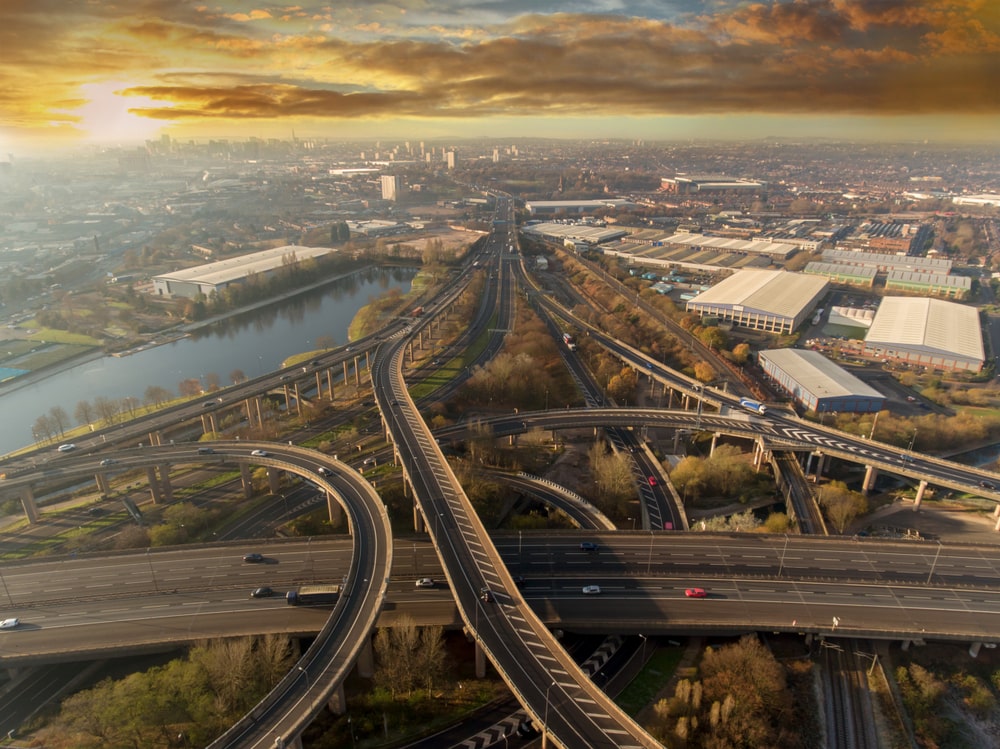
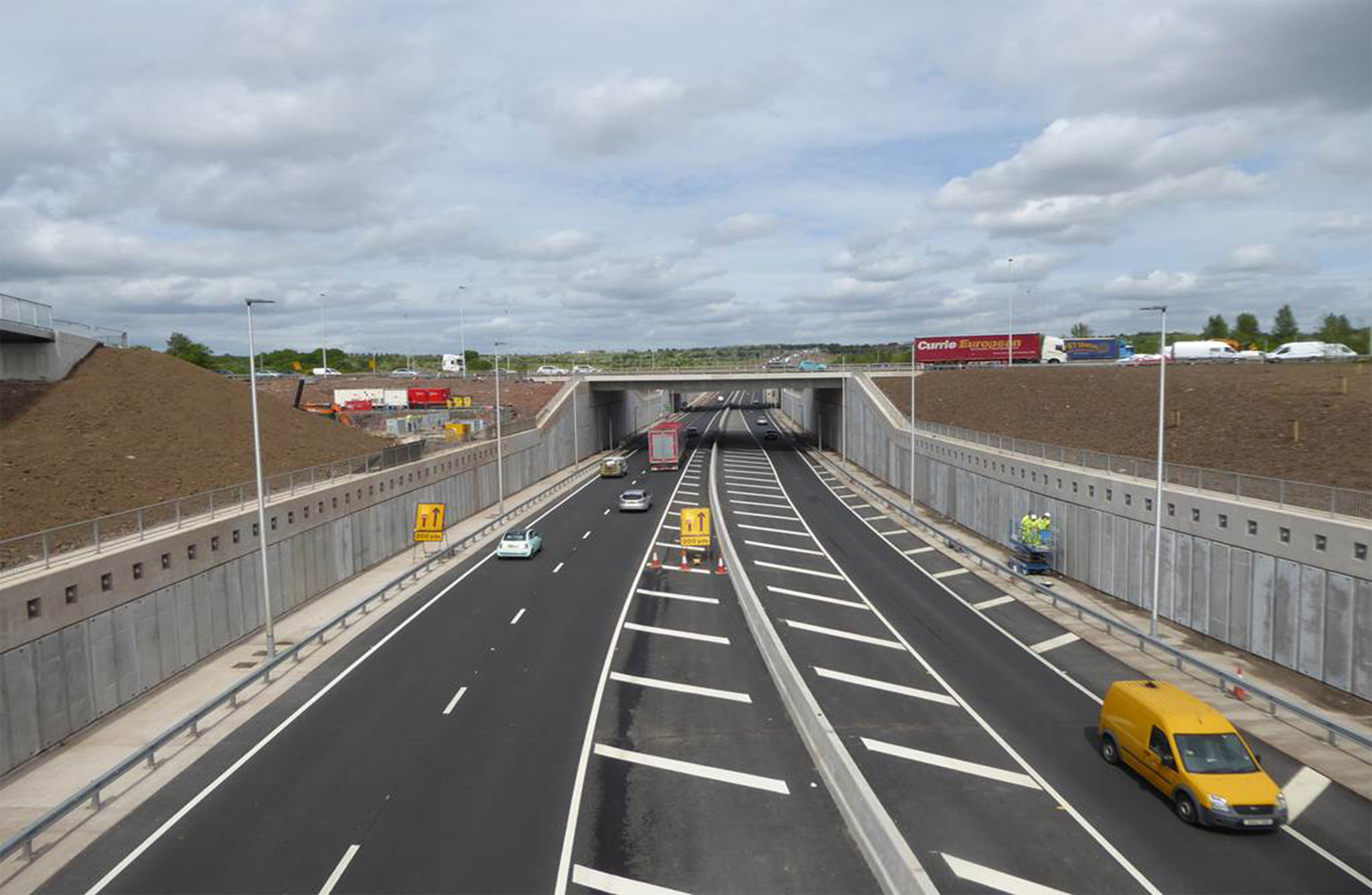
The scheme which we were instructed to audit is a new two-bore tunnel under the River Thames in London to connect Silvertown on the North and Greenwich on the South side of the River Thames with new junctions at either end. The tunnel section itself will have two lanes in both directions, with one of the lanes being a dedicated Bus/Coach/HGV lane. The purpose of the scheme is to provide an additional river crossing to alleviate current traffic levels and congestion at the nearby Blackwall Tunnel as well as providing an opportunity for regeneration on both sides of the river. For the tunnel section and tie in junctions, TMS carried out Stage 2 Road Safety Audits, but in addition has carried out Stage 1 audits on the proposed Temporary Traffic Management schemes on the A102 and Millennium Way that will be necessary to facilitate the construction works.

Assessments

The scheme is quite varied in the sense that the two junctions at either end of the tunnel section are different. At the Silvertown Junction a traffic signal junction is proposed and at the northern end (Silvertown), a large traffic signal junction is to be provided to tie into the existing local road network and features facilities for pedestrians and cyclists.

A free flow slip-road design is proposed at the Greenwich Junction. At the southern end (Greenwich), entry and exits to and from the tunnel portal will feed as free slip roads into the A102 which will also provide entry and exit to the Blackwall Tunnel.

Final Thoughts

Darren Newbold, the Audit Team Leader for the scheme, found the project to be of particular interest.  Darren commented:  “It will be the first new Thames River crossing to the east of Tower Bridge in over thirty years (Dartford Crossing being the last)”.

This will also be the first time TMS have been involved in any River Thames crossing infrastructure. The initial site visit was interesting as the audit team were able to take the Emirates Cable Car, from which gave a superb overhead view of the alignment of the new tunnel.  This is a unique scheme for TMS, as a company, to be involved in and for the auditors it will be interesting to see the scheme develop over the next few years, before having a drive through in 2025.

The view of the Canary Wharf in London from Greenwich.

With the completion of the Silvertown Tunnel, London due for completion in circa 2025, TMS have now started undertaking Stage 3 Road Safety Audits on offline temporary, TTM and enabling works around the extents of the tunnel project.

We expect to be visiting Greenwich many more times over the next couple of years.

Tower Road South, Birkenhead, Merseyside – Public Realm scheme

Tower Road South, Birkenhead, Merseyside – Public realm scheme

Introduction

The public realm scheme, which is located on Tower South Road, Birkenhead was completed in March 2021. The works were commissioned by a leading consultancy in transport planning, infrastructure design and flood risk. We were involved with all stages of the Road Safety Audit process to ensure proper safety procedures were undertaken throughout. A key objective of the scheme was to improve the environment for all road users, with wider high-quality pavements for pedestrians and cyclists, narrower carriageways to reduce traffic speeds, new crossing points to link existing and future developments at Wirral Waters and the surrounding areas. The scheme aimed to influence driver behaviour, which included reducing speeds but also providing awareness of a change in environment, with road safety in mind. The scheme had to have a clear perception of safety whilst maintaining the attractiveness of the area for students, employees, and visitors.

Assessments

The public realm scheme is a hybrid style with separated footway/cycleway but with minimal signage and direction. Innovative and striking features including an imprinted ‘roundel design’ to replace the existing signalised junction, (this feature is the equivalent to an informal roundabout). Red and white ‘chevron’ footways were another unique feature. With the removal of conventional features such as signal control and standard footways, this can add an element of uncertainty and caution for users. Although this can be a positive for road safety improvements, if this is executed correctly.


Newly built roundabout and a small bridge that goes over a river.


Final Thoughts

Lee Williams, who was one of the auditors for the scheme, stated that “this was a good example of auditing a scheme with new and innovative elements, whilst keeping an open mind, but still ensuring good execution and road safety”. The audit process was followed from start to finish and as a result, safety improvements were made to the scheme following our recommendations.

The scheme has recently been featured in the local press and has been nominated for an award:

“We’re thrilled that the Tower Road Streetscape, our project to create a safe and attractive thoroughfare in #WirralWaters, has been shortlisted for the Liverpool Sub-regional Project of the Year in the NW Regional Construction Awards!”

Link: twitter.com/WirralWaters/status/1443535773077327873

Back to top