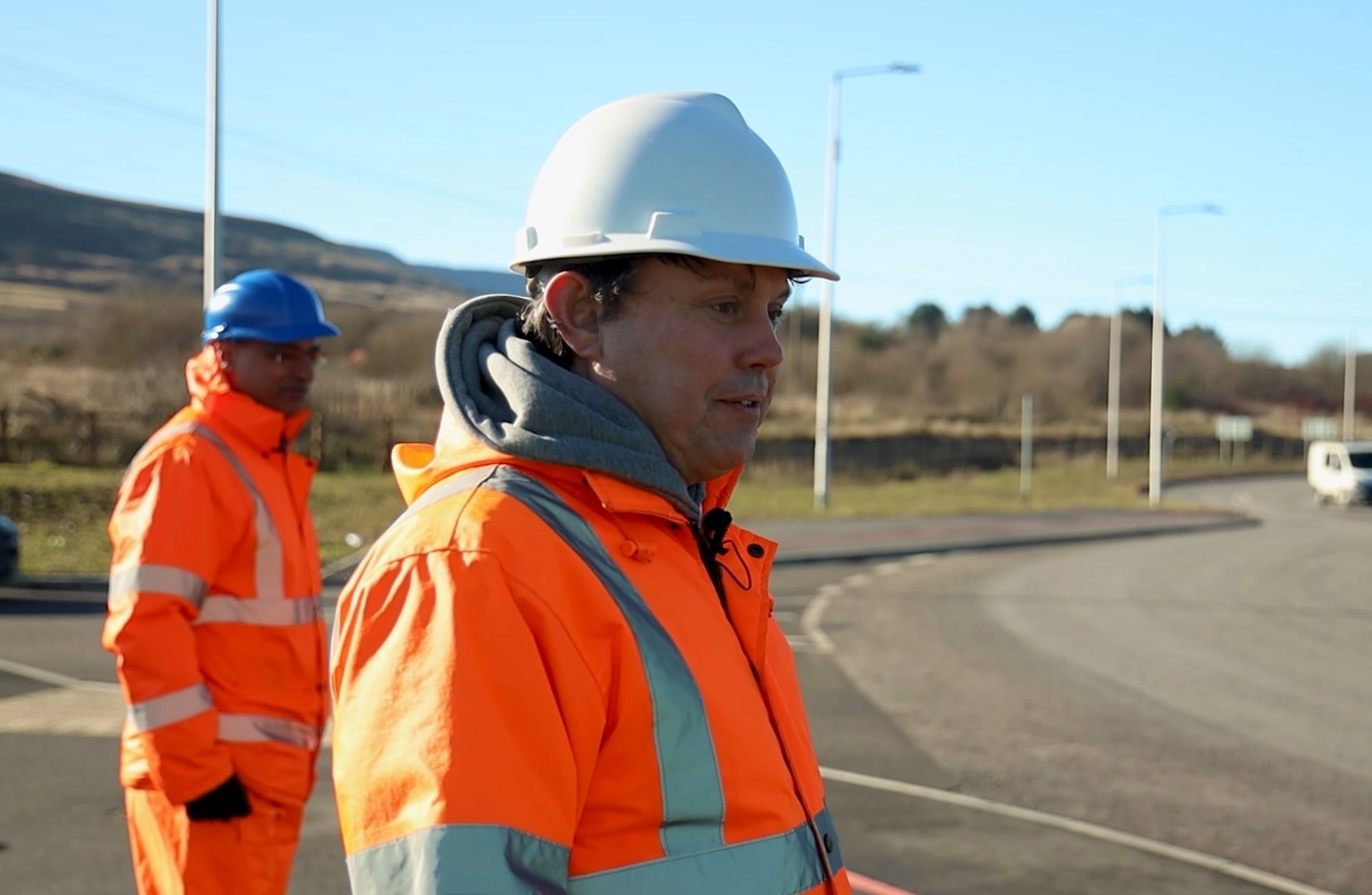
Heads of the Valleys Road Upgrade Officially Opens after two decades

Heads of the Valleys Road Upgrade Officially Opens after two decades

Over the last 12 months, TMS Engineers Harminder Aulak, Lee Williams and Mike Fuller have been busy carrying out Stage 3 Road Safety Audits on the last section of the A465 Heads of the Valleys project in South Wales. The 11mile (17.7km) section of brand new dual carriageway runs from Hirwaun to Dowlais Top and replaces the existing single carriageway road. TMS are extremely proud to have been involved in this project.

The final phase of the £2 billion Heads of the Valleys Road upgrade programme has now officially opened, marking the end of the project. The Welsh Government said it marked the completion of “one of the UK’s largest and most technically challenging road projects”. The £1.4 billion Section 5 and 6 Dowlais to Hirwaun final phase links the Valleys, South and West Wales to the English Midlands and beyond.

This has been one of the largest road safety projects TMS has been involved with in recent years. Since the summer of 2024, we have carried out 41 separate visits and produced 53 reports.  The process involved walking the majority of the new roads before they were fully opened to traffic and we estimate that our Engineers have walked a staggering 50km along the mainline, grade separated junctions and side roads. Good for the daily step count!
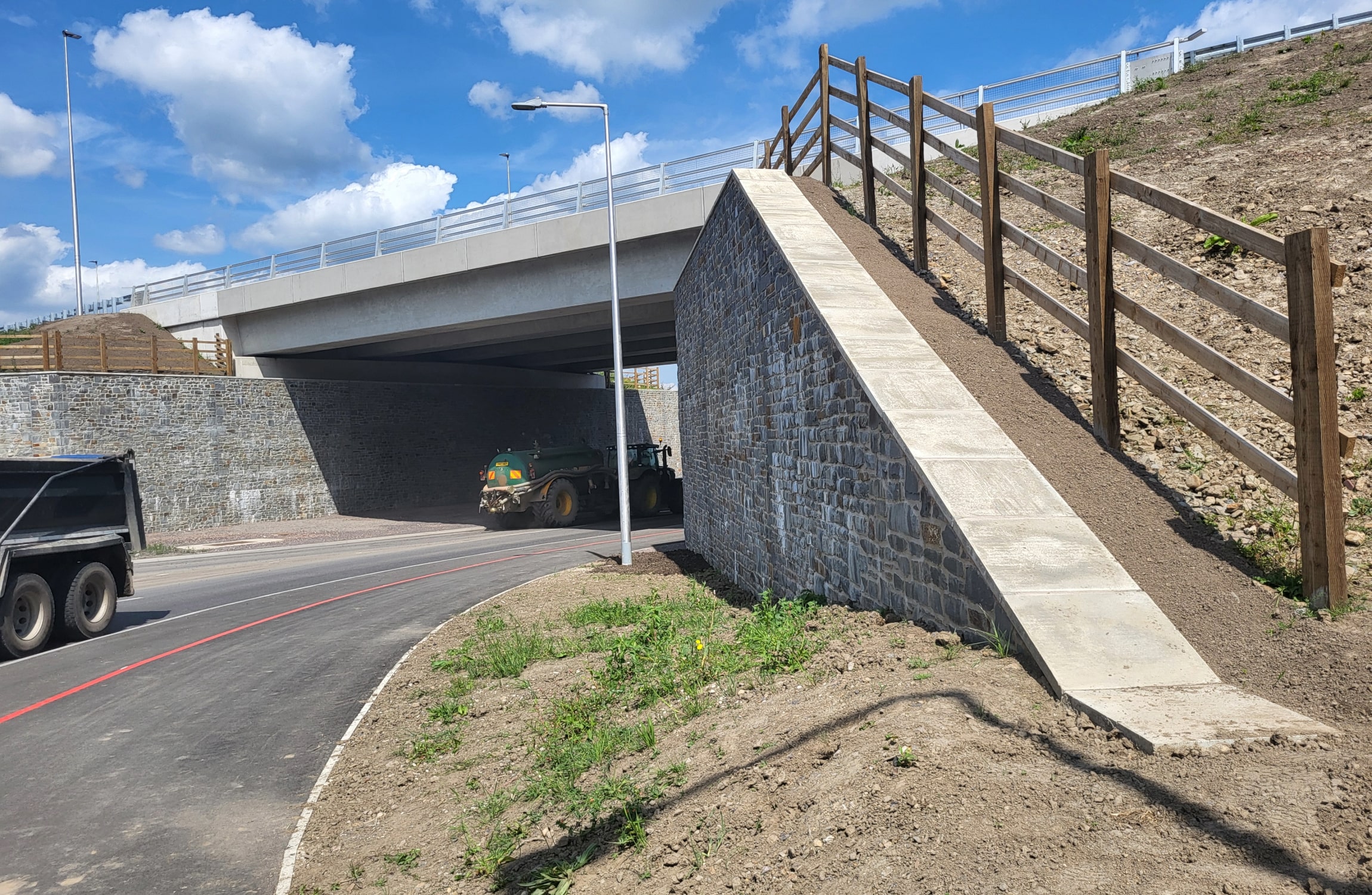
Heads of the valley bridge

The programme was demanding due to the short time frames and deadlines to produce the audit reports before the “Permits to Use” were issued to the Contractor (as part of the phased opening).  Though challenging, TMS delivered in terms of arranging the audits (with the Contractor, Welsh Government Representatives, South Wales Police and Local Highway Authorities), inspecting the sites in both daylight and night-time conditions and producing the Stage 3 reports.

It was very satisfying to see that the vast majority of our recommendations to improve road safety and reduce the risk of future collisions were carried out promptly by the contractor. Many of the recommendations involved lower cost measures, such as improving roadside protection, ensuring street furniture was forgiving in the event of a collision (passively safe), road signs, markings and reflective studs provided optimum performance and facilities for pedestrians, cyclists and equestrians were safe to use.

We are confident that many of our recommended measures would produce a high economic rate of return in terms of collision savings, especially when fatal and serious casualties are taken into account. It is rewarding that we have played a part in ensuring the new road is as safe as possible as people travel smoothly and efficiently along the new road.

Over the time we worked on this project, our auditors built excellent relationships with our client, the Police and various other third parties. It was a pleasure working with all that were involved with this prestigious project. Andrew Carter from South Wales Police kindly provided the following testimonial.
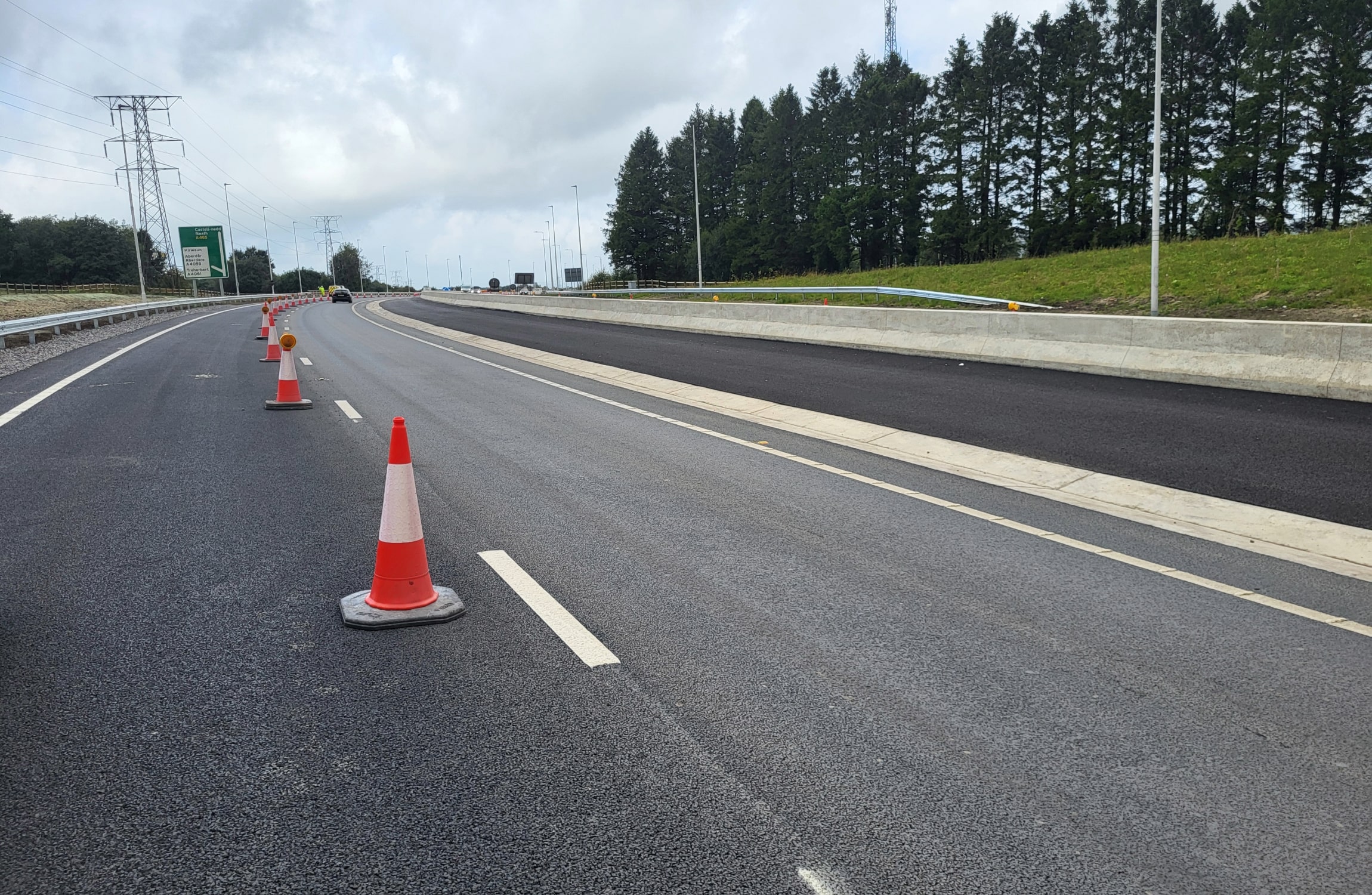
Heads of the valley road

Andrew Carter – South Wales Police 

“The A465 Heads of the Valley Scheme was the largest civil engineering scheme to have been undertaken in Wales for well over thirty years. TMS were commissioned to carry out Stage 3 Road Safety Audits for the entire scheme with the lead auditor being Hammy Aulak and his colleague Lee Williams.

From the very start of the 40 plus audits completed on the scheme, the SWP Traffic Management Unit struck a good working relationship with both Hammy and Lee, and the combination of design knowledge and required specifications, coupled with over fifty years’ experience of the SWP officers, in relation to collision investigation and road user behaviour, in my opinion made a formidable partnership.

As a team I believe we identified some unique methods to offset any potential safety issues, which in fairness were rectified by the construction company and implemented quickly. Hammy was always prepared to look at any potential safety issues identified by myself and my colleague Ian Stephen and include them in his reports. We also found the expertise of both Hammy and Lee very helpful and their depth of knowledge and will be included in our annual PDR’s.

I firmly believe that what has been constructed is probably one of the best and safest sections of carriageway in Wales thanks to TMS with input from ourselves. I wouldn’t hesitate to recommend TMS for any future schemes, and it was a pleasure and enjoyable learning curve for the SWP Team.”

Watch the video below to join our engineers on-site to see the work that goes into our Road Safety Audits.

If you have a scheme of this nature that requires a Road Safety Audit, then please call us on +44 (0)24 7669 0900 or alternatively please email Lorna Styring or request a quote using the link below.

Portsmouth City Centre – Transforming Cities Fund (TCF)

Portsmouth City Centre – Transforming Cities Fund (TCF)

TMS have completed a series of comprehensive Road Safety Audits from preliminary design at Stage 1 through to the post construction at Stage 3, within Portsmouth City Centre, under the Transforming Cities Project.

What is the Transforming Cities Fund?

The TCF is a £2.45 billion capital grant transport fund aimed at driving up productivity through investments in public and sustainable transport infrastructure in some of England’s largest city regions. Improving access to good jobs within English cities and encouraging an increase in journeys, made by low-carbon and sustainable modes of transport, are key objectives of the TCF. The TCF also aims to support wider cross-cutting priorities such as tackling air pollution, delivering more homes and delivering apprenticeships and improving skills investments.

Our client was commissioned by Portsmouth City Council to design the highway improvement schemes under the Transforming Cities Fund (TCF). The aim was to provide bus and cycle improvements to the network, improve pedestrian links and journey times within the city. TMS were involved with auditing key highway areas of the city, at various stages, including City Centre North, City Centre South and Lake Road Corridor.

Charlotte St

City Centre North (Charlotte Street and Unicorn Junction)

For this area of the city, a new link was created between Cascades Approach and Unicorn Road, including a two-way bus lane. The junction with the A3 and Unicorn Road was redesigned to include a slip lane from the A3 to Unicorn Road. Charlotte Street was also redesigned to incorporate a one-way bus lane, which connects Cascades Approach to Commercial Road through the existing high street.

City Centre South

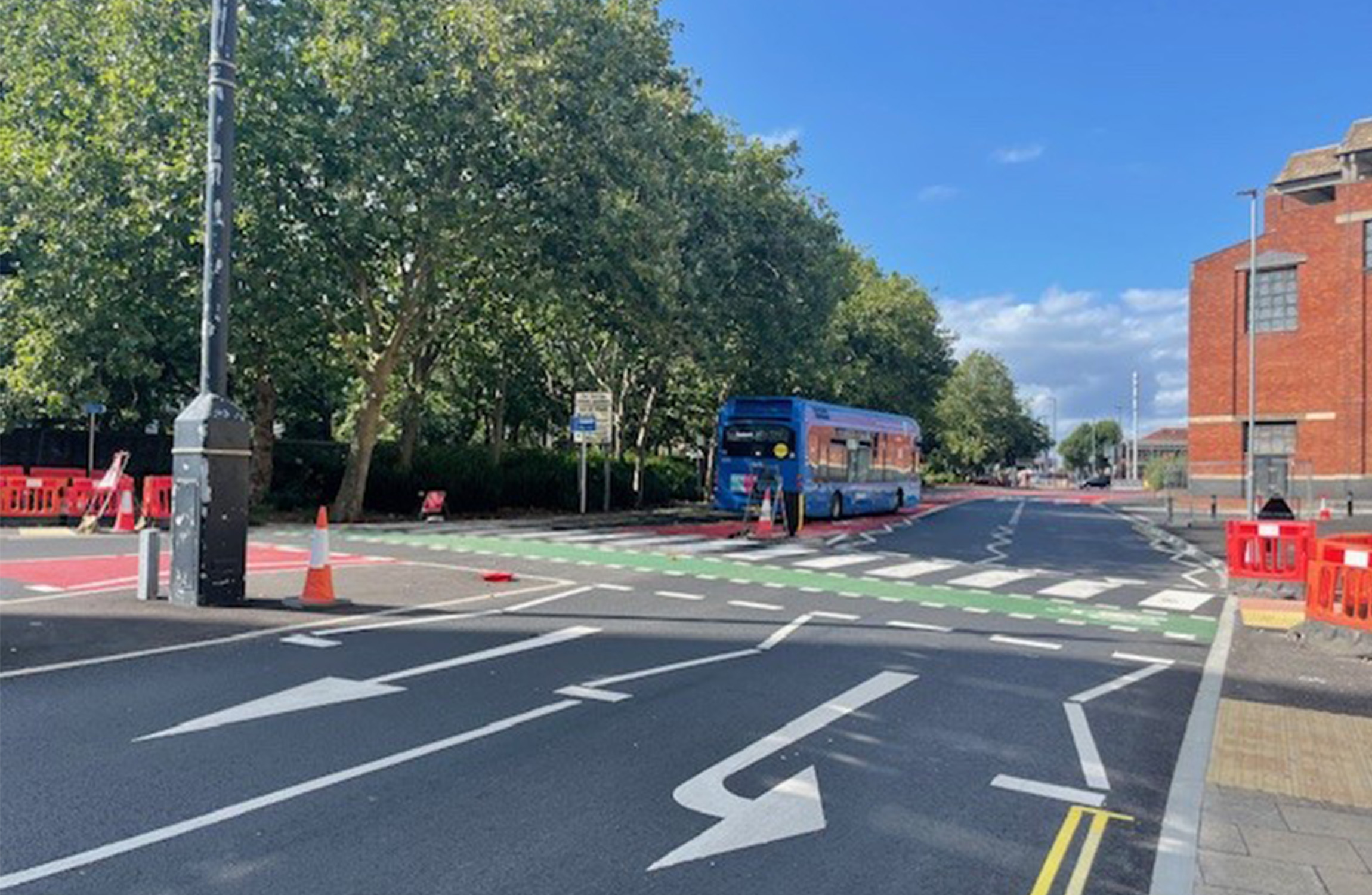
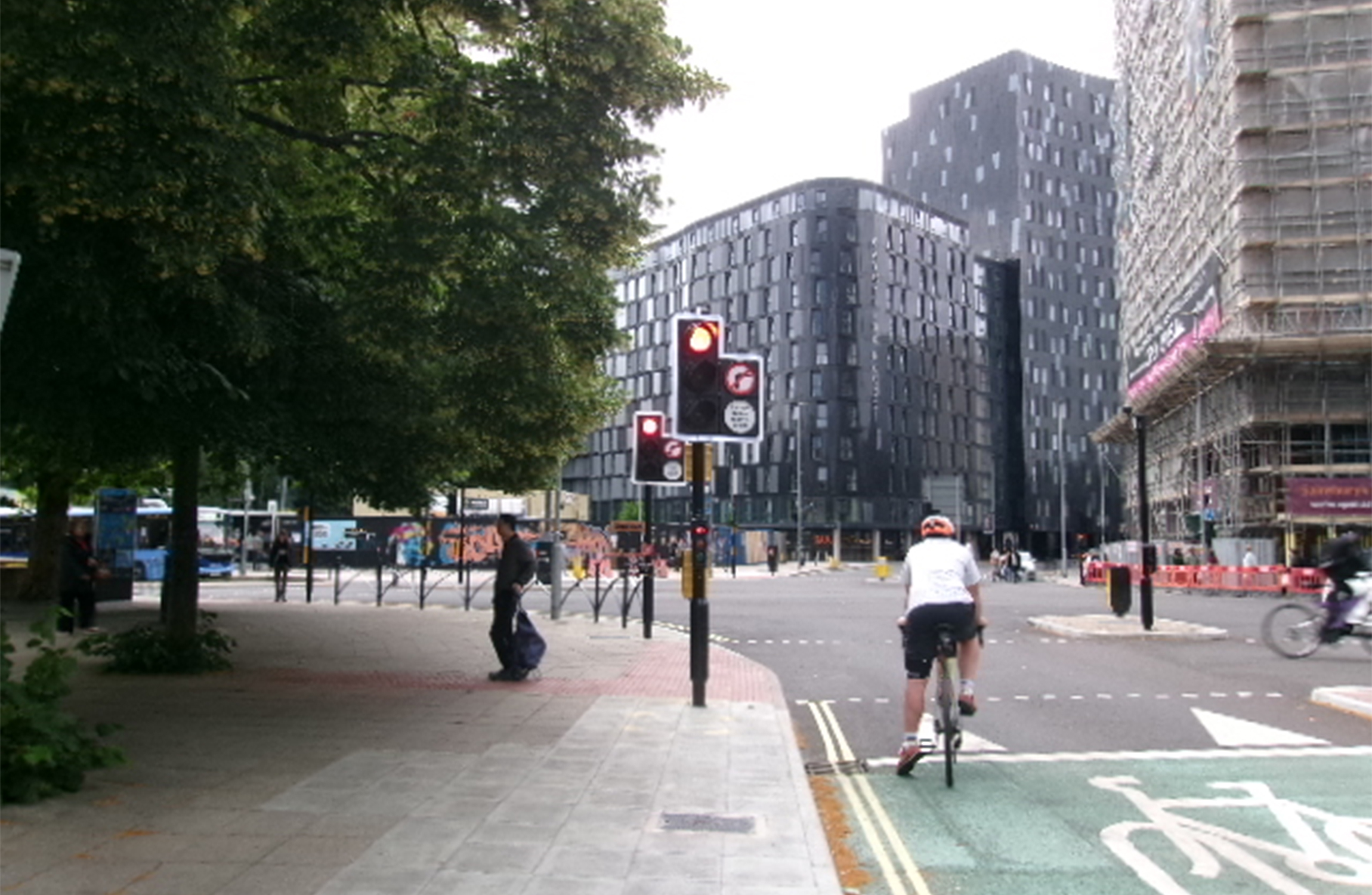
The City Centre South highway scheme removed the existing roundabout and installed a signalised junction. A cycle lane had been added to both sides of Station Street (eastern arm) and to the approach of the roundabout from Stanhope Road (western arm). New pedestrian crossings were also installed at each approach arm. An existing uncontrolled crossing had been signalised on Isambard Brunel Road at the location of a loading bay.

City centre south
Lake Rd & Lake Rd 1

Lake Road Corridor

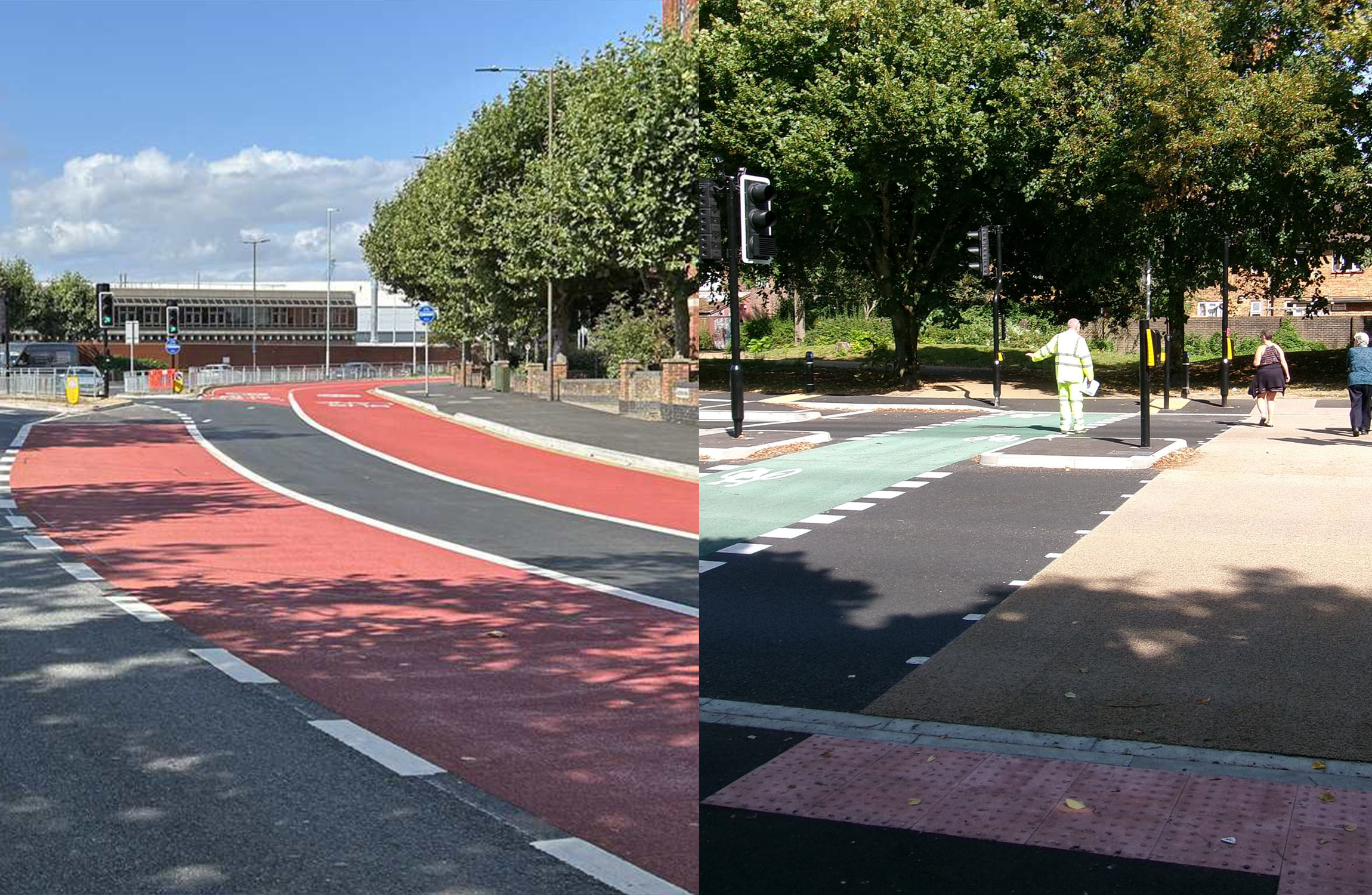
This scheme consisted of widening Lake Road (west) to create a west-bound bus lane and on-carriageway segregated cycleways in both directions. This involved diversion of existing utilities, new drainage and lighting and resurfacing of the entire road. Lake Road / Holbrook Road roundabout was retained with adjustments to the geometry. In Lake Road (east) the scheme included the provision of two on-carriageway cycle lanes, improvement to pedestrian facilities and upgrading the existing pelican crossing to a signalised crossing for pedestrians and cyclists.

Neal Roderick, who formed part of the audit team, commented “It was rewarding to work through the various audits from Stage 1 right through to Stage 3 and to see the designs come to fruition. If Stage 4 Road Safety Audits are commissioned in the future, we hope to be involved with these too. It will be interesting to see how the highway schemes are used by the various road users and if they have made significant improvements to the city”.

If you have a scheme of this nature that requires a Road Safety Audit, then please call us on +44 (0)24 7669 0900 or alternatively please email Lorna Styring or request a quote using the link below.

HTP at The Royal Shrewsbury Hospital

Hospital Transformation Programme at The Royal Shrewsbury Hospital

Further to an Interim Stage 3 Road Safety Audit carried out in August 2024, TMS conducted a Stage 3 Road Safety Audit in March 2025, on behalf of Shrewsbury & Telford Hospital NHS Trust, associated with extensive amendments to the internal road and footway network, which were required as part of the Hospital Transformation Programme.

The Hospital Transformation Programme is a multi-million pound investment which will improve care for everyone through modern, purpose-built facilities and to ensure more people get the care they need. The project involves refurbishing, remodelling and extending the existing Emergency Department at The Royal Shrewsbury Hospital, along with constructing a new hospital design. Construction work is well underway to build a new four-storey building, which will provide the space they need to start new ways of working.

The Royal Shrewsbury Hospital currently faces challenges stemming from its gradual growth, leading to problems with movement, navigation and departmental arrangements throughout the site. The new design aims to solve these problems by creating a thoughtful and organised hospital facility. This includes better layouts for departments, improved paths for movement and enhanced orientation areas. Additionally, the project prioritises creating distinct entrances and enhancing the overall site layout through improved landscaping.

The planned opening is expected to happen in 2028.

The Works

At the time of our commission, the amendments to the internal road and footway network which were constructed included a new realigned spine road accessed from the roundabout with Mytton Oak Road, a new footpath to the east side of spine road and a new, operational, one-way system around part of the site.

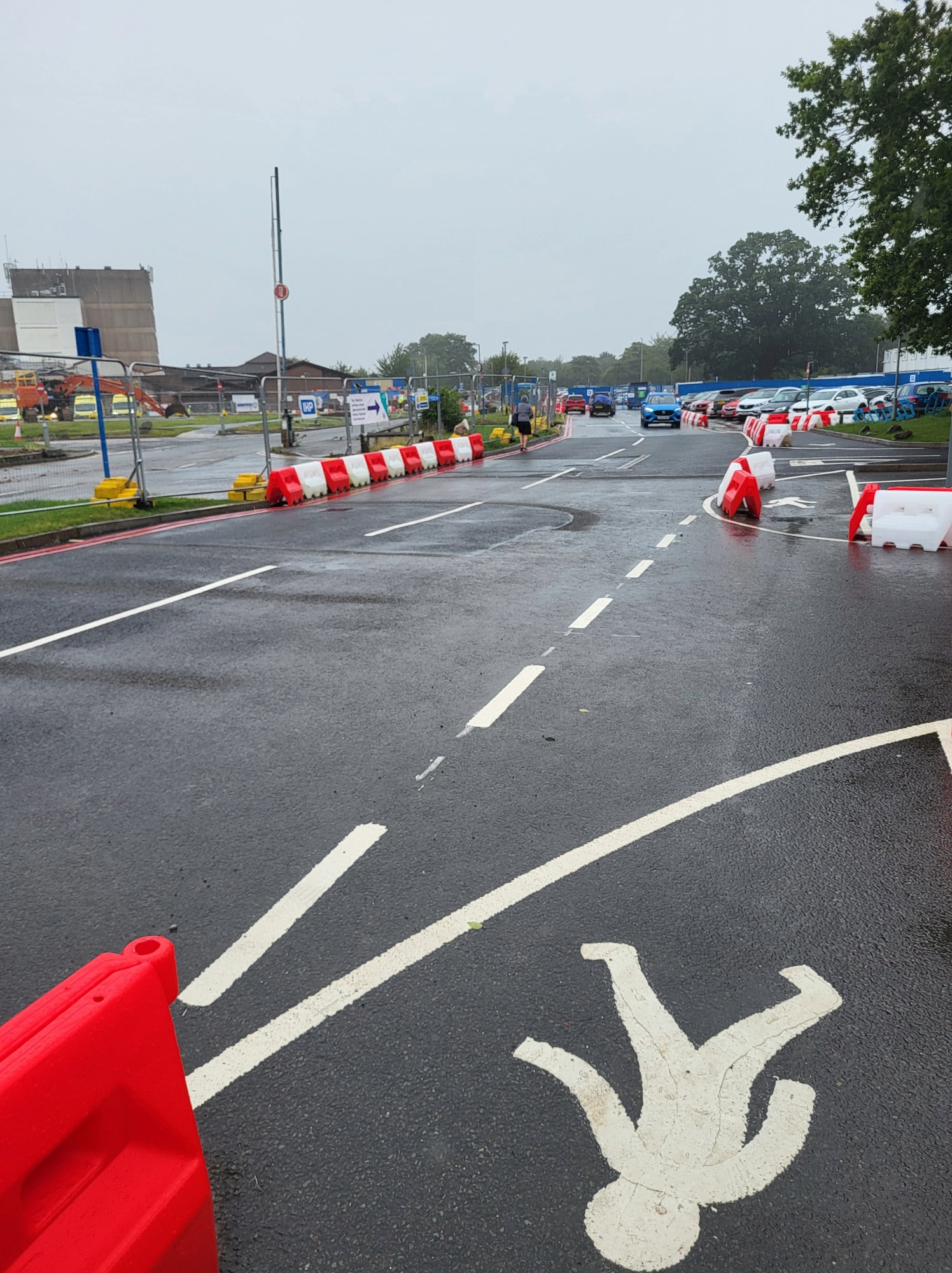
In addition to this, a new vehicular exit was created from the hospital (in the late afternoon) via Racecourse Lane, relocated visitor and staff car parking areas and various amendments to the car park accesses and management to suit the new realigned spine road and associated virtual footway separated from traffic by water filled barriers.

The internal hospital roads are privately managed and maintained.  They are street lit and are subject to a signed 20mph zone.  As part of the works the speed limit will be reduced to 10mph on the internal hospital roads.

Interim Stage 3 Road Safety Audit

Assessments

During the Interim Stage 3 Road Safety Audit, concerns about road safety were raised by the Trust that despite some temporary signage being introduced, pedestrians were not using the virtual footway which is separated from traffic by water filled barriers and instead were walking on the spine road where they are exposed to vehicles.

Recommendation

After monitoring pedestrian movements on site, the Audit Team considered that there were three overriding factors which were resulting in pedestrians walking on the spine road.

The first being that all of the car parks are located on the opposite side of the spine road to the main hospital.  Thus, the pedestrian desire was to cross the road as soon as possible.

As there are no footways present on the opposite side of the spine road to the car parks for significant sections, the second factor and thus a recommendation was to provide improved pedestrian wayfinding signage from the car parks.

The third factor was that at one of the primary pedestrian crossing points of the spine road, it is unclear for pedestrians where the route continues on the opposite side of the road due to the provision of an information kiosk booth obscuring the view of the route.  Thus, pedestrians were walking on the spine road.  It was recommended that the crossing was upgraded to a Zebra type with associated Belisha beacons with enhanced pedestrian signage.  The Trust subsequently advised that the information booth was planned to be relocated.

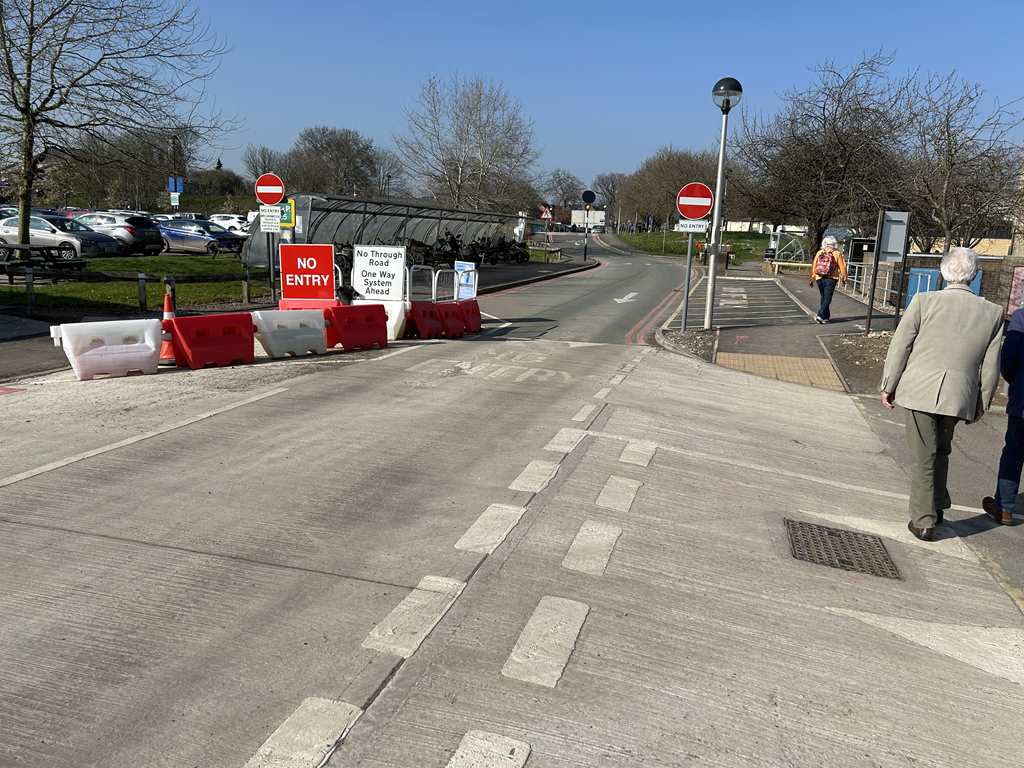
Royal Shrewsbury Hospital junction.
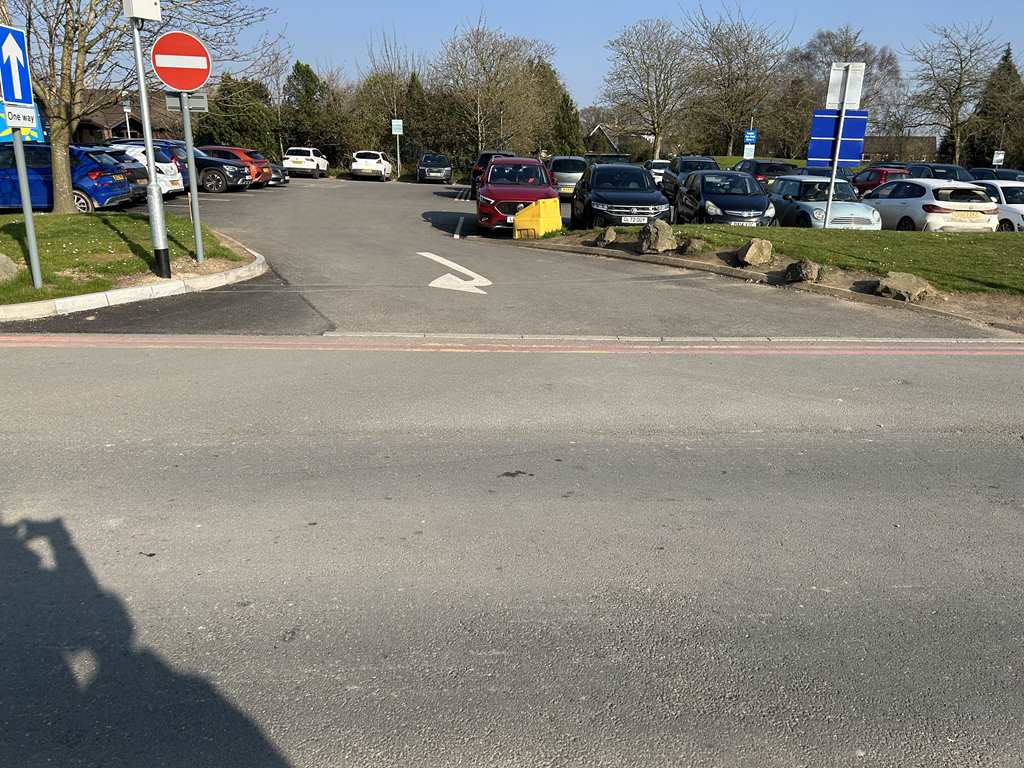
Royal Shrewsbury Hospital one-way system

Stage 3 Road Safety Audit

Assessments

Following completion of the works in December 2024, concerns about road safety were raised by the Trust that some vehicles were travelling the wrong way on the one-way section of road around the site, despite new signage and road markings being introduced.

Recommendation

After a comprehensive walk through of the scheme, the Audit Team recommended that amendments to the location of some signs and the sign faces of some others may encourage greater compliance with the one-way system.

If you have a scheme of this nature that requires a Road Safety Audit, then please call us on +44 (0)24 7669 0900 or alternatively please email Lorna Styring or request a quote using the link below.
Updated version of DMRB ‘GG 119 Road Safety Audit’ is now released

Updated version of DMRB ‘GG 119 Road Safety Audit’ is now released

GG 119, the document which is used to implement Road Safety Audit (RSA) for highway schemes on motorways and trunk roads in England, Scotland, Wales and Northern Ireland, was subject to an update to version 2.0.1 in April 2025. The Road Safety Audit Standard requires all strategic road schemes to have an independent road safety audit carried out.

GG 119 is also commonly adopted by local highway authorities as good practice, even if they don’t have their own specific Road Safety Audit procedures. The majority of road safety audits within the UK are undertaken in accordance with GG 119. The Standard provides a structured process to identify potential safety problems in highway schemes and suggest ways to mitigate them.

Lee Williams (TMS) making notes in a drawing plan

What are the changes?

The changes from Version 2, released in January 2020, are relatively minor, primarily relating to updates to reflect name changes of Overseeing Organisations, updated reference document links and removal of reference to the Trans-European Road Network, alongside some grammatical amendments.

Technically, changes from Version 2 include the following:

  • Clarification that a Road Safety Audit (RSA) Response Report is not required for Stage 1, 2 or 3 audits, where the RSA does not raise any problems.
  • If the Design Organisation does not accept the RSA problem and recommendation, that undertaking a risk assessment is an appropriate way to inform decision making.
  • The Local Authority should be consulted should an RSA problem or recommendation affect the local highway network, with the summary of the consultation documented in the response report.
  • Recommendations accepted by the Design Organisation and Overseeing Organisation arising from Stage 1, 2 and 3 Road Safety Audits should be implemented as soon as practicable, ensuring those with the highest risk are implemented first.
  • Recommendations accepted by the Overseeing Organisation arising from a Stage 4 Road Safety Audit, should be implemented as soon as practicable.


If you have a highway scheme that requires a Road Safety Audit and would like a quotation, then please contact us on +44 (0)24 7669 0900. Alternatively, please email Lorna Styring or request a quote using the link below.
Hammy Aulak (TMS) and Lee Williams (TMS) looking at the roundabout

At TMS, we pride ourselves on our integrity and independence within the RSA process. Our team of safety auditors have extensive knowledge and experience in carrying out Road Safety Audits on all types of highway schemes, on the local, trunk and motorway network throughout the UK. All Road Safety Audits undertaken by TMS fully comply with the requirements stipulated under GG 119.

Back to top