Installation of Hostile Vehicle Mitigation at QEII Olympic Park

Installation of Hostile Vehicle Mitigation at QEII Olympic Park

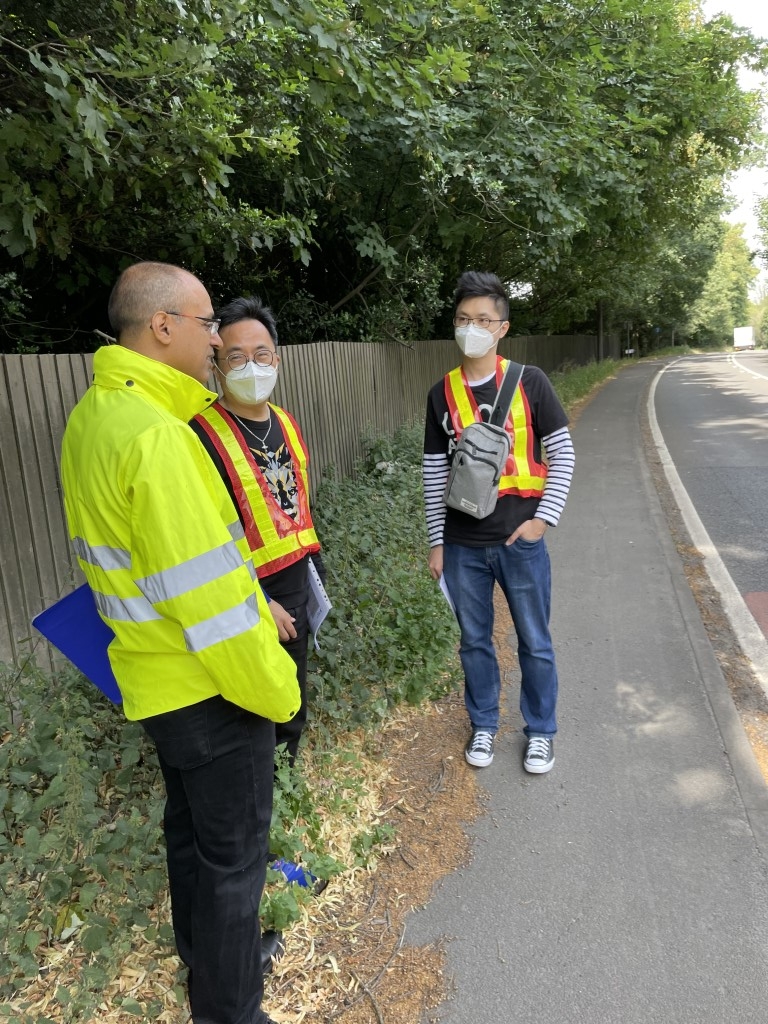
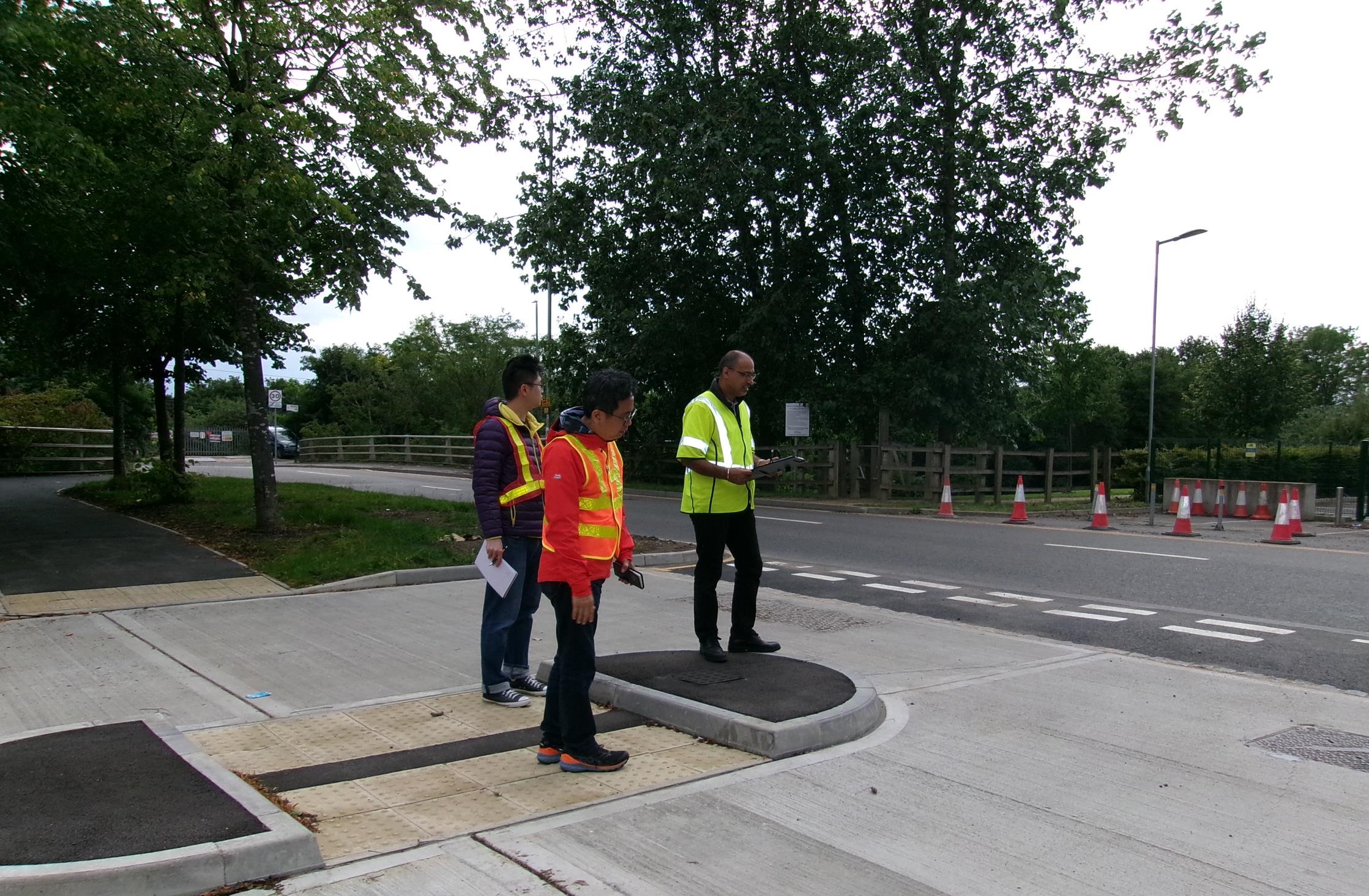
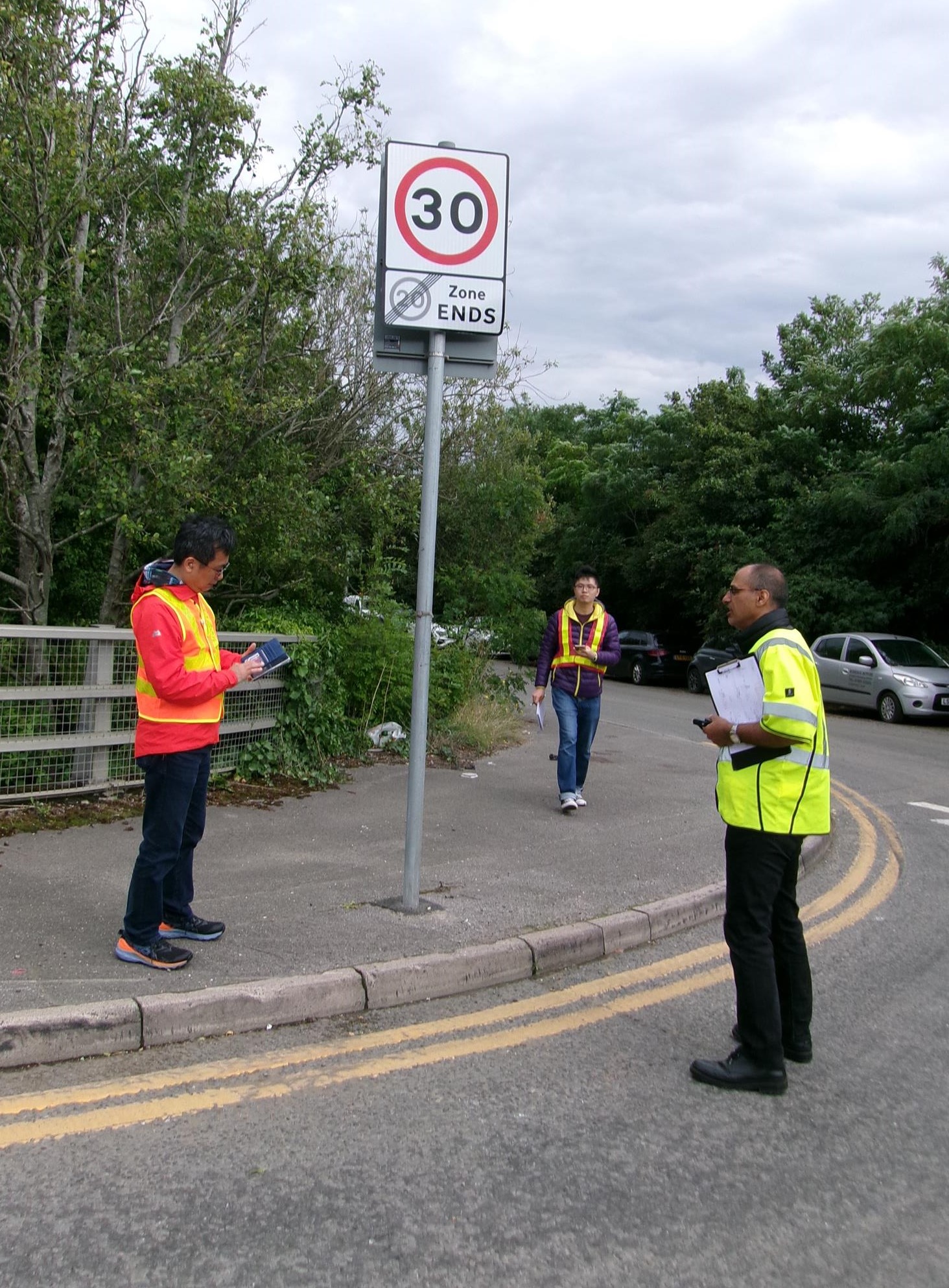
Back in December 2023, TMS were commissioned to carry out Stage 2 Road Safety Audits and Mobility Audits at various locations around the London QEII Olympic Park, for new Hostile Vehicle Mitigation (HVM) installations. These measures have since been installed, to assist with the implementation of enhanced streetscape furniture within the public realm. Our audit team returned to Stratford in June 2024, to carry out the Stage 3 Post Construction Road Safety Audits, at these locations.

Hostile Vehicle Mitigation (HVM) is a generic term that covers a suite of anti-terrorist protective measures that are often employed around buildings or publicly accessible spaces/venues of particular significance. The design of these various vehicle security barriers and landscape treatments came about as security authorities across the world sought to mitigate the effects of vehicle borne improvised explosive devices and vehicle-ramming attacks.

The various installations, within the Olympic Park, are essentially swing gates, which are strategically located to facilitate the Stratford area being a ‘locked down’ protected zone (this may be for large public events at the London Stadium or for ‘threat’ type situations).
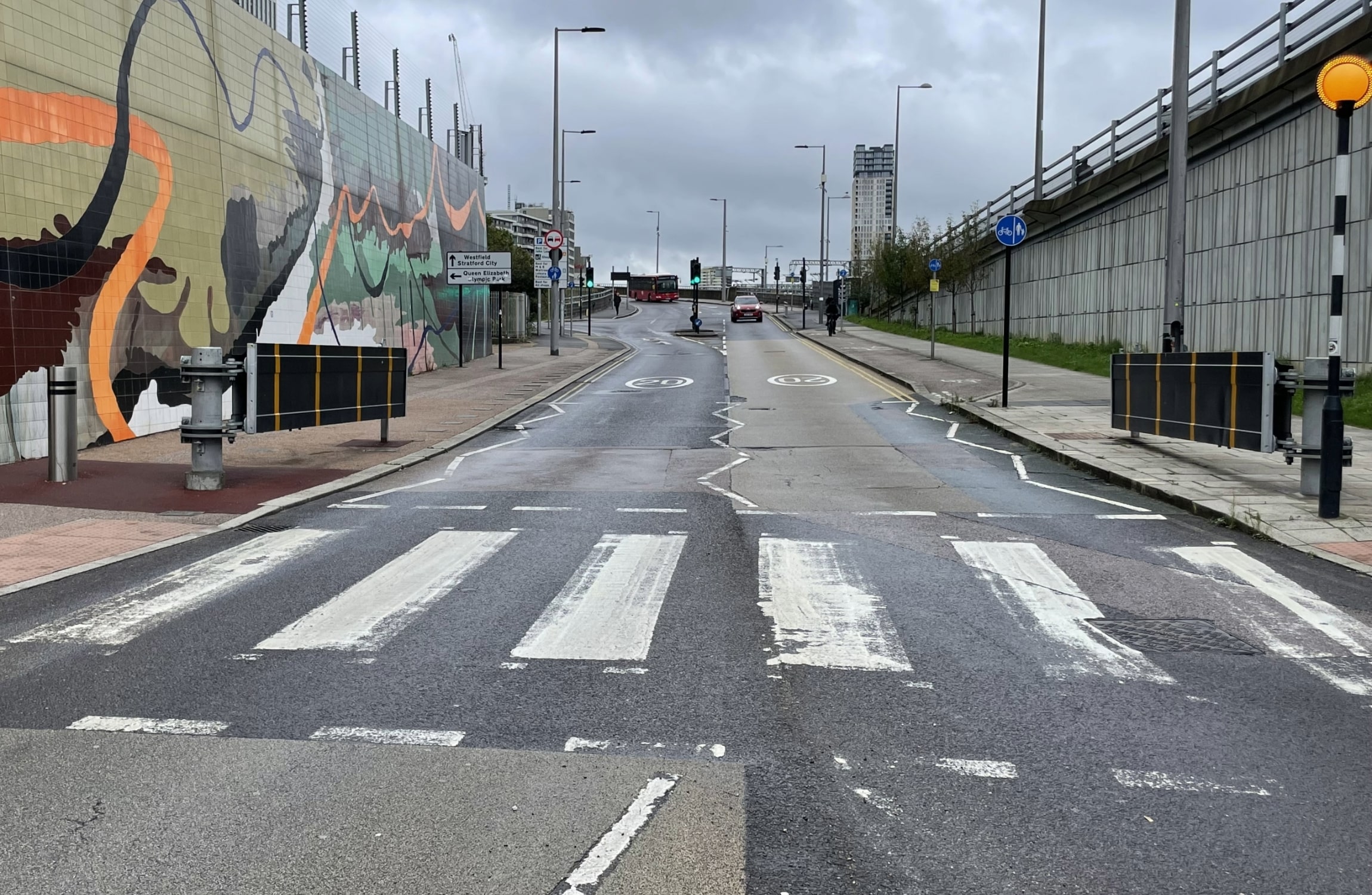
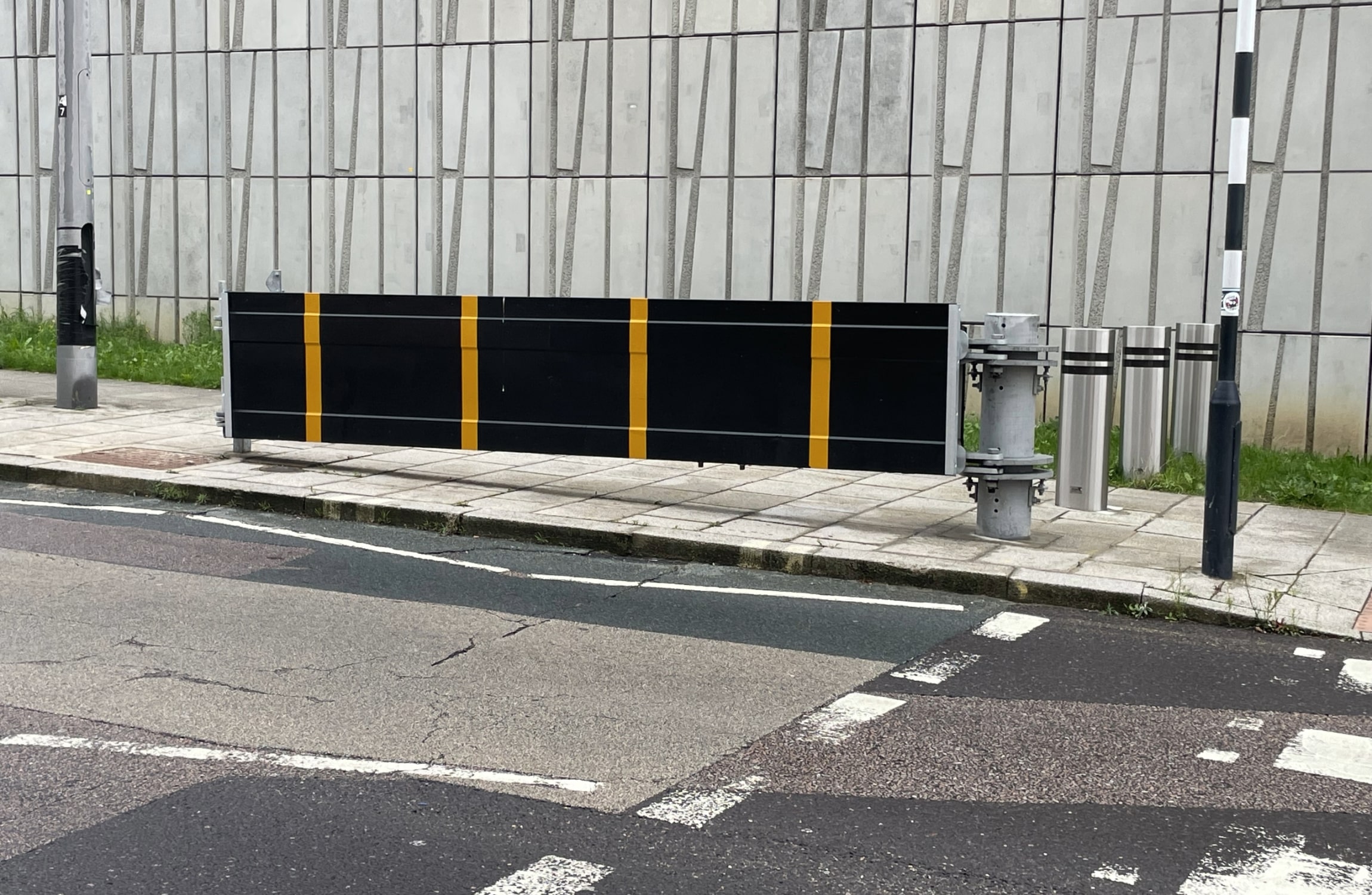
Barriers QE2 London
Swing Gates QE2 Park, London

In all the locations, the gates are located on footway or central islands parallel to the kerb and locked in place, when not required. The singular or dual gates can then be closed across the carriageway, when required, to prevent vehicular access and are designed to withstand vehicle impacts. All gates have been sympathetically designed to minimise street clutter and interference with existing pedestrian and cycle routes.

As part of HVM installations, it is important that the surroundings remain open and inclusive, and that the addition of physical security measures are designed to protect the public but are integrated and proportionate to the identified threat.

Many cities and venues across the UK are adopting similar HVM measures around government buildings, airports, large railway stations, sports and entertainment venues and crowded night time locations. We expect to be involved with auditing more of these type of Hostile Vehicle Mitigation schemes in the future.

If you have a scheme of this nature that requires a Road Safety Audit, then please call us on +44 (0)24 7669 0900 or alternatively please email Lorna Styring.
The A465 Heads of the Valley project starts to pick up pace

The A465 Heads of the Valley project starts to pick up pace

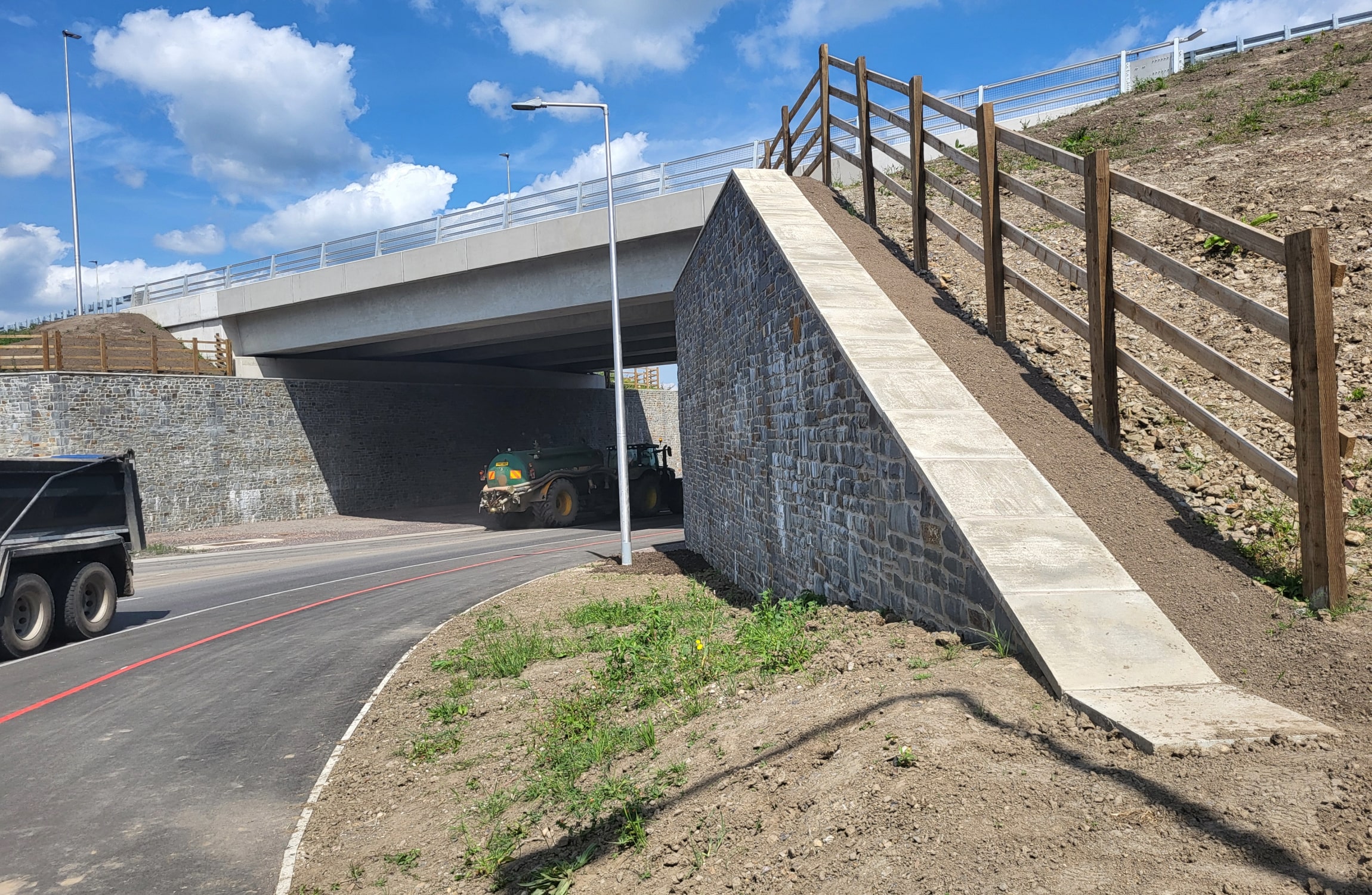
Work on site for the major South Wales road project, the A465 Heads of the Valley scheme, has now started to pick up pace. TMS have been involved with this project since being appointed as FCC Construction’s Road Safety Audit provider back in 2023. TMS were commissioned to carry out the Stage 3, Post Construction, Road Safety Audits for this project. Since early Summer, our auditors have regularly been to site, carrying out both Interim and full Stage 3 Road Safety Audits on various junctions and mainlines around Hirwaun. The A465 Heads of the Valleys Section 5 and 6 road improvement scheme is a 11-mile (17.7 km) dual carriageway that will run from Hirwaun to Dowlais Top.

The project aims to improve traffic flow, safety, and overtaking opportunities. The improved road will complete the last dual carriageway “missing link” along the A465, which forms part of the strategic road network connecting the Midlands to Wales. TMS has previously worked in the side road improvement schemes that facilitated the construction of the mainline.

Heads of the valley scheme bridge.
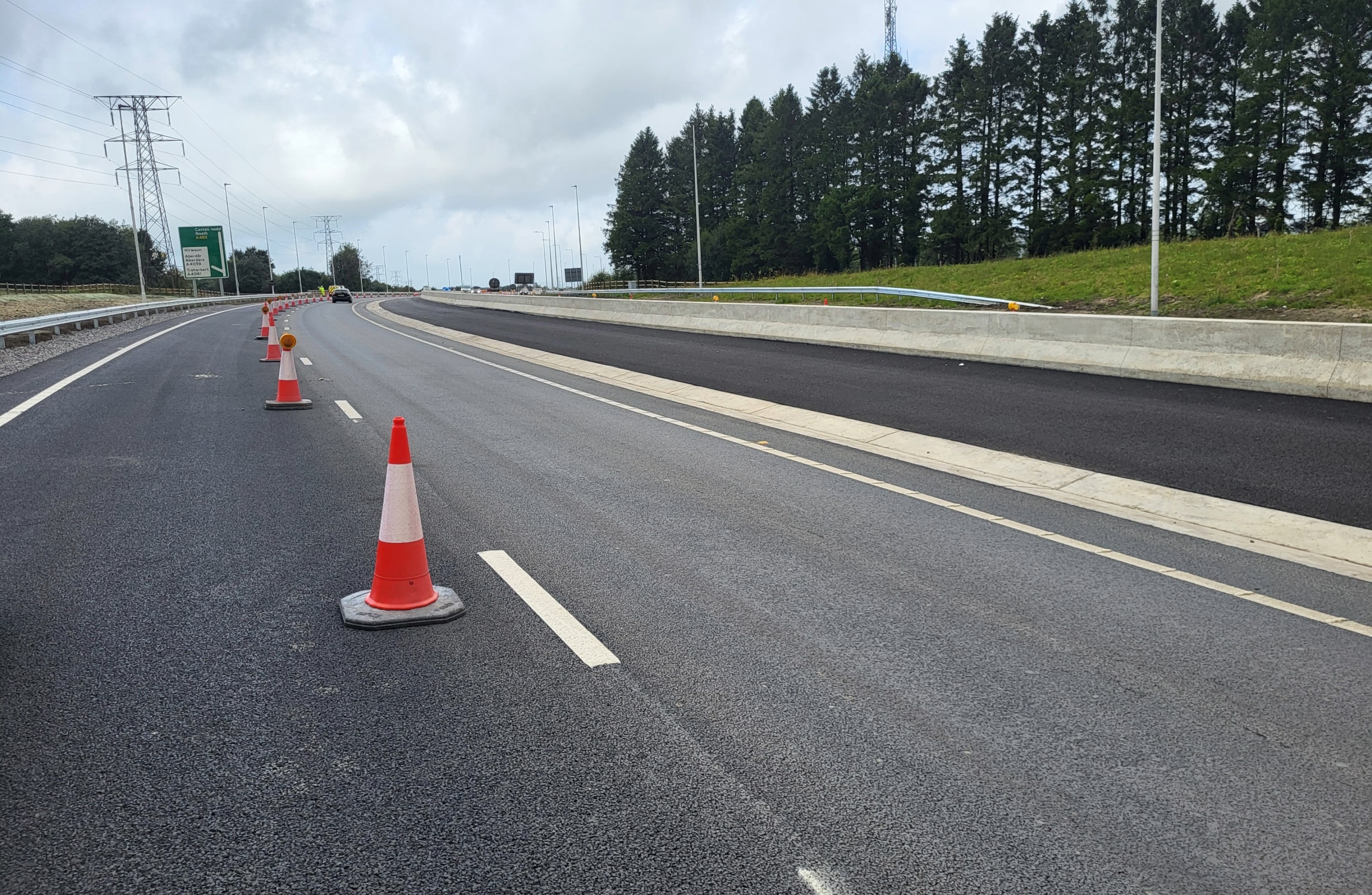
Heads of the valley scheme with traffic cones.

Due to the complexity of the project, we have decided to phase the Stage 3 Road Safety Audits and so far, have carried out audits on the grade separated junction at Hirwaun and the associated mainline. Our input is to identify any potential road safety hazards with the built scheme and suggest recommendations to reduce the risk of collisions. We have already made numerous suggestions to improve road safety and reduce the risk of injury to road users, and it is satisfying to see these measures being implemented. We look forward to continuing our work on this project until its estimated completion date of mid-2025.

Harminder Aulak, Road Safety Audit Team Leader for the project, said:

“We are delighted to be involved in the biggest road infrastructure project ever commissioned by the Welsh Government, which has an estimated cost of £590M. It is also considered one of the most challenging projects due to the existing complex topography requiring the construction of viaducts, rock cuttings, several grade-separated junctions and extensive environmental mitigation measures”.

Here at TMS, our team of safety auditors have extensive knowledge and experience in carrying out Road Safety Audits on all types of highway schemes, including major road schemes like this. If you would like more information on our involvement in this project, or to discuss your requirements for a Road Safety Audit, please email Lorna Styring or call us on +44 (0)24 7669 0900

Junction Assessment Tool and Cycle Level of Service

Junction Assessment Tool and Cycle Level of Service

TMS have recently carried out a Stage 2 RSA on a Transforming Cities Fund (TCF) Public Realm Improvement Scheme, which involved carriageway realignment, footway widening, measures to restrict through traffic movements, and the reallocation/additional provision of Bus Shelters.

As part of the funding process the scheme had been designed to align with LTN1/20 guidance, namely improved bus journey times and provision for active travel. A balance for the use of the existing highway corridor was required to provide sensible and safe carriageway widths whilst maintaining suitable widths for cycleways and footways.

LTN1/20 guidance contains tools to give local authorities flexibility on the infrastructure design and sets out a measurable quality threshold to achieve when designing cycling and active travel schemes, namely the Junction Assessment Tool and Cycle Level of Service mechanism.

The Junction Assessment Tool (JAT) and Cycle Level of Service (CLoS) are new mechanisms introduced in LTN1/20 to set minimum quality criteria. These tools give local authorities flexibility on design of infrastructure but set an objective and measurable quality threshold.

Cycleway with cyclist on the cycle lane and pedestrian crossing the road.

Both mechanisms are comprehensive. A JAT examines all potential cycle movements at a junction, not just those that may be associated with a designated cycle route, to identify the potential for conflicts and should be used whenever new and improved junctions are being designed. The junction assessment should be represented graphically, colour coding each movement either red, amber, or green. LTN 1/20 outlines the colour coding as:

Appendix A of LTN1/20

Red – Where conditions exist that are most likely to give rise to the most common collision types, then the movement should be represented on the plan as a red arrow.

Amber – Where the risk of those collision types has been reduced by design layout or traffic management interventions, then the movement should be coloured amber.

Green – Where the potential for collisions has been removed entirely, then the movement should be coloured green.

‘Green’ should be taken to mean suitable for all potential cyclists; ‘red’ means suitable only for a minority of cyclists (and, even for them, it may be uncomfortable to make). Green movements will exceed the standards that have typically been achieved in the UK to date.

A worked example of how to apply the tool can be found in Appendix B of LTN1/20

Image source: LTN1/20

The CLoS tool includes a simple scoring assessment based on attributes of the five design criteria (Coherent, Direct, Safe, Comfortable and Attractive), which can be used to identify strengths and weaknesses, and therefore what the design needs to address. The tool includes some factors that are considered to be ‘Critical Fails’ – results that represent unsafe conditions for cycling which must be addressed (or an alternative route found). This tool can be found in Appendix A of LTN 1/20.

For the scheme that TMS were involved in the JAT showed that there were some improvements for cyclists along the scheme corridor. A high percentage of green and amber arrows, however due to current highway constraints (corridor widths/third party land) there were several red arrows identified for right turning cyclists deviating from the main line. However, in justification it was considered that the number of cyclists making these right turns would be very low.

The Scheme CLoS achieved a score of 84%, 14% above the desired score and therefore was considered to be acceptable for the DfT.

Road in Bristol with a cycleway.

If you have a scheme of this nature that requires our help on, then please call us on +44 (0)24 7669 0900 or alternatively please email Lorna Styring.

Binley Cycleway

Binley Cycleway, Coventry

Coventry City Council have created a new segregated cycleway along Binley Road, between the Gulson Road and Clifford Bridge Road/ Brinklow Road junctions. A further section exists on Clifford Bridge Road between the Dorchester Way junction and the University Hospital in Walsgrave. Between these sections, there is a “missing link” which will be provided in the future.

TMS Consultancy, whose offices are based in Binley Business Park, are close to the cycleway and therefore provided an ideal opportunity for TMS Engineers to try out the new cycleway. Some highlights of the route are described below:

  1. Two-way cycleway is separated from traffic using kerbed segregation. The surface is high quality asphalt, which is coloured at some junctions and accesses to highlight it to road users.
A person riding a bike on a cycle way.
Copenhagen style crossings

2. Access to private properties have been created using “Copenhagen” style crossings, allowing the route to be continuous without interruption.

3. Cyclists have their own specific traffic signals at controlled junctions and crossings. In most cases, detection equipment gives priority to cyclists so that they turn green as cyclists approach.

Traffic signals at controlled junctions of the cycle way
Parallel Crossing that gives priority to cyclist

4. At side road junctions, Parallel Crossings (similar to zebra crossings) have been provided, giving priority to cyclists and so improving journey times by reducing the need to stop.

5. A cycle maintenance stand and parking is available at one location to allow cyclists to pump up their tyres, tighten bolts, etc, using the multiple tools available at the stand.

Floating stops and raised islands

6. The cycle route is made continuous at bus-stops by creating “Floating” stops on raised islands. The layout features crossing points across the cycle route allowing access for pedestrians.

Overall, our thoughts were that the cycleway provided a pleasant, comfortable, safe and efficient route for cyclists, particularly as it is separated from the busy road.

In our opinion, the cycleway met the core design principles for safe and efficient use by cyclists, which are set out in the Department for Transport Document “LTN 1/20 Cycle Infrastructure Design.” The core principles are that cycle infrastructure should be Coherent, Direct, Safe, Comfortable and Attractive. Once fully completed, the Binley Cycleway will provide an ideal way to cycle between the city centre and the hospital.

If you have a scheme of this nature that requires a Road Safety Audit, then please call us on +44 (0)24 7669 0900 or alternatively please email Lorna Styring.
Back to top