EV Charging around the UK

EV Charging around the UK

TMS have been touring the UK to undertake various Road Safety Audits on infrastructure associated with sustainable power installation, such as solar farms, electric vehicle charging points and battery storage facilities.

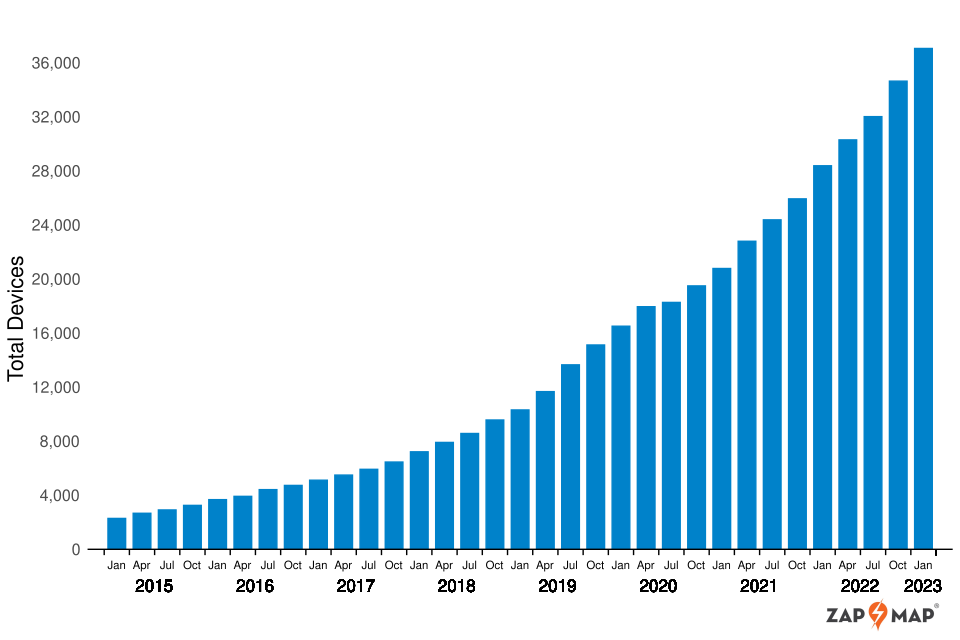
Map of the number of UK public charging devices

There has been rapid growth in electric vehicle charging (EV) points in the UK since the first electric vehicle charging points were installed in the early 2000’s. However, since the mid 2010’s EV charging points have become a common sight on the public highway and car parks throughout the UK.  In January 2015 there were 2,283 charging devices, with 195 of these being rapid charging or above. Compare that to June 2023, where there are now over 44,000 charging devices with over 8,000 of these being rapid or above.


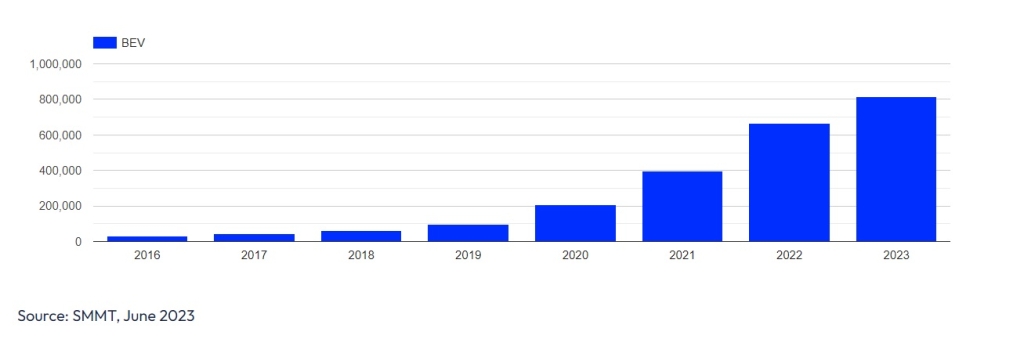
The rise of fully electric cars has also followed a similar trend. According to ZapMap, in 2016 there were 30,669 fully electric vehicles there are now 816,668 in 2023.  At the end of 2016 just 0.4% of all new vehicles registered were electric, this had risen to 16.6% by the end of 2022.

cumulative number of battery electric vehicles registered in the UK 2016 - 2023
Cumulative number of battery-electric vehicles in the UK (2016 to July 2023)

To cope with the increasing demand for electric vehicles, many of our clients are proposing to install rapid EV chargers (100KW) on the public highway in city centre locations.  If electric vehicles are going to be an option for city centre residents, there is a requirement for an effective and convenient network of public charge points for everyone to use.

The Birmingham city-wide EV charge point strategy is an example of what local authorities can do to ensure that residents (particularly those who do not have access to off-street parking), taxi drivers, commercial fleets and visitors to the city, have access to a convenient charge point when they choose to go electric.

EV Charging point on the road

Over the past year, we have carried out numerous design stage Road Safety Audits on EV charging points, at various locations within Birmingham City Centre and Barnet, for this very reason. Most of which utilising the existing marked parking bays with the addition of the kerbside charging unit. When carrying out a Road Safety Audit on electric vehicle charging points it is important to ensure that the location of the required infrastructure does not affect the safety of road users and pedestrians.

Solar Farm

We have also audited a priority junction access on a dual carriageway in Essex for a proposed battery storage unit and an access for a solar farm installation in Oxfordshire. The accesses are required for the purpose of construction of the site and ongoing maintenance vehicles thereafter.

Road Safety Audits on such schemes are becoming more and more frequent as the country intensifies it’s move towards such power sources.  TMS has carried out design stage road safety audits on both EV charging points and solar farms throughout the country, in places such as Greater London, Birmingham, Northamptonshire, Leicestershire, Oxfordshire, Surrey and Hampshire.

At TMS, we carry out a huge amount of Road Safety Audits each year throughout the UK.  If you have a scheme of this nature that requires a Road Safety Audit, then please call us on +44 (0)24 7669 0900 or please email Lorna Styring.

Digital Screen Advertisements – A distraction to road users?

Digital Screen Advertisements – A distraction to road users?

TMS has recently seen an increase in enquiries to carry out Road Safety Audits on proposed roadside Digital Screen Advertisements. We have recently carried out work in London for the Piccadilly Underpass and Hagley Road in Birmingham.  It is important that these types of schemes are audited to ensure road safety risks are assessed and they do not pose a prolonged distraction to road users.

Digital Screen Advertisements are now commonplace on the highway network, however, they can also be a factor in causing distraction to drivers.

In 2018/19, research into roadside advertising was carried out by the CEDR, a consortium of three research institutes; SWOV, TRL and Vias institute). Known as ‘ADVERTS‘ or, Assessing Distraction of Vehicle drivers in Europe from Roadside Technology-based Signage”, the project outcome was the creation of a set of ten recommendations for minimising distraction from roadside advertising.

  1. Don’t cause confusion with road signs
  2. Don’t block the road users view
  3. Avoid complex locations
  4. Don’t use moving images
  5. Don’t encourage non-driving actions
  6. Keep it simple
  7. Minimise transitions
  8. Don’t dazzle road users
  9. Don’t have flashing lights
  10. Avoid overlarge billboards

These recommendations are available from the ADVERTS website as a full report, a visualised summary of the ten recommendations listed above and a recorded webinar of the project and its main results.

The proposed screens in the schemes we audited were varied in size and the types of messages they displayed, with the newer advertisements proposed to feature subtle moving imagery. Therefore, the auditors assessed each location against several criteria including; proximity of existing infrastructure, conflict points and critical road user decision points.

The recommendations helped the clients to determine the suitability of the locations and decide whether mitigation measures would be necessary to minimise the risk of collisions.

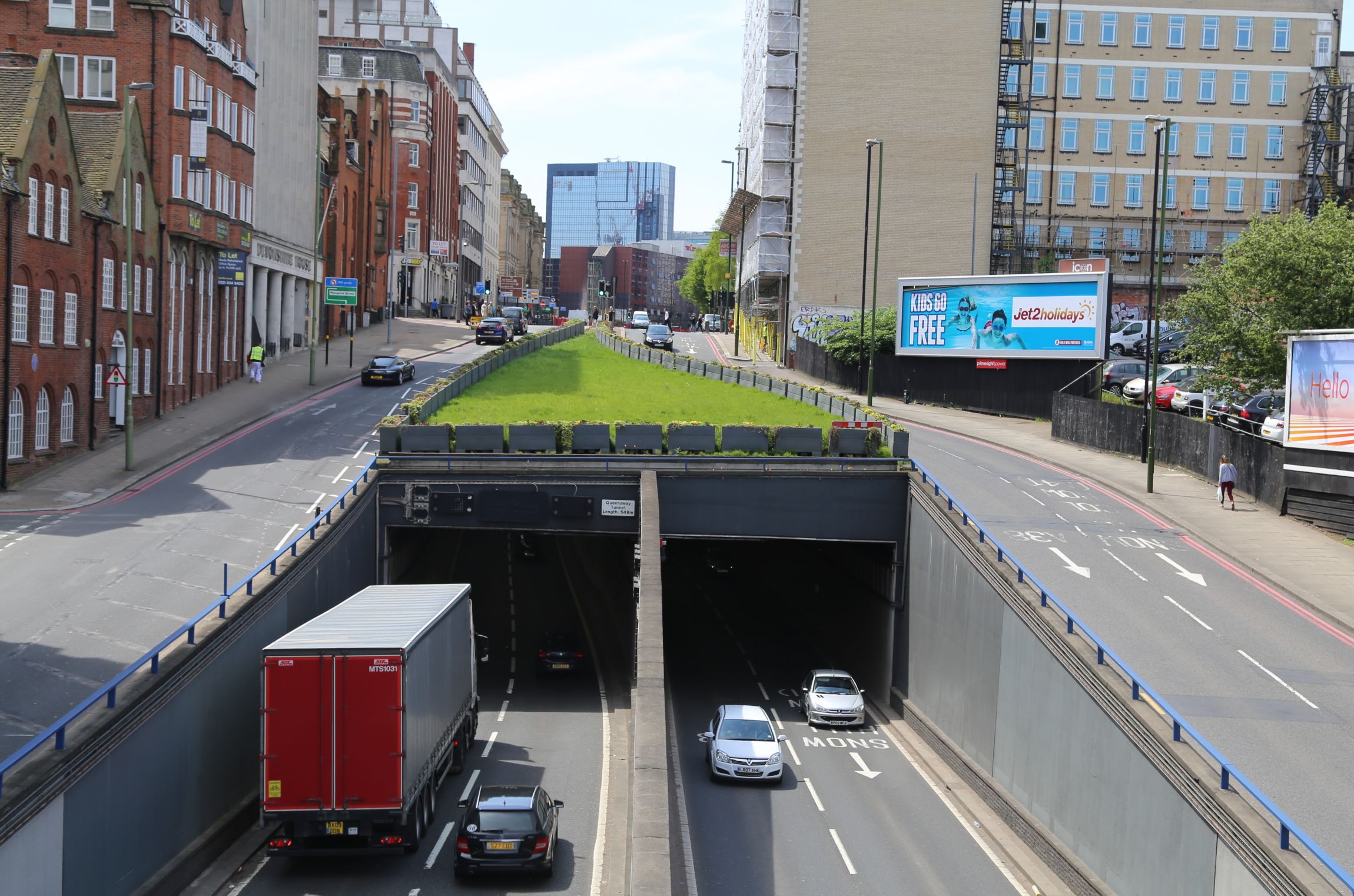
Birmingham, West Midlands, England, UK. 17 May 2018. The A4400 Queensway duel highway , passing the City centre

TMS has experience in carrying out Road Safety Audits and independent safety/risk assessments for digital screen advertising projects.  The fundamental reason for clients commissioning studies of this nature is to ensure the proposed digital advertising does not cause significant distraction to drivers and to identify any potential road safety risks associated with the erection of the new digital screens.

If you have a scheme of this nature that requires a Road Safety Audit, then please call us on +44 (0)24 7669 0900 or alternatively please email Lorna Styring.
Stoke-on-Trent Transforming Cities Fund

Stoke-on-Trent Transforming Cities Fund

Since 2021, TMS has been involved in auditing the highway improvement works for Station Road and College Road, which form part of the Stoke-on-Trent Transforming Cities Fund (TCF).  We were commissioned as part of the Stoke TCF, to carry out Stage 1 Road Safety Audits in August 2021 and have recently just completed the detailed design road safety audits for the project.

Stoke-on-Trent were awarded £29 million by the Department for Transport though the Transforming Cities Fund (TCF) in recognition of the council’s commitment to driving economic growth through investment in sustainable public transport. The funding sets out to transform how people move around the city, address current infrastructure challenges, and create better connections between the railway station, city centre and key employment sites across the area.

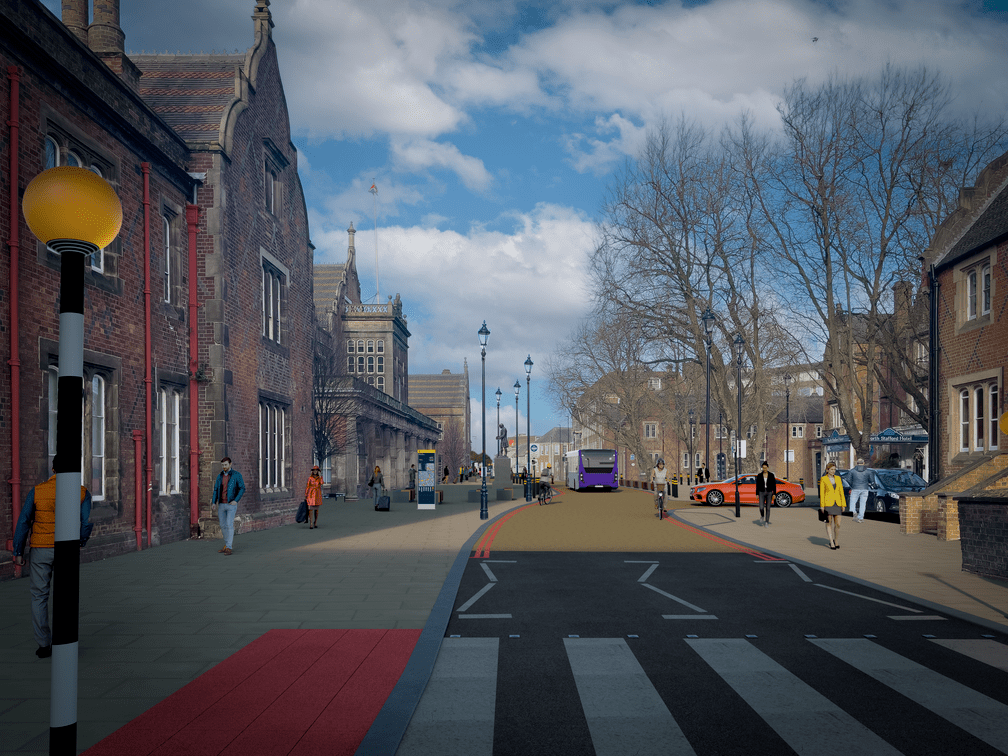
(Artist impression taken from Station Road Consultation link)


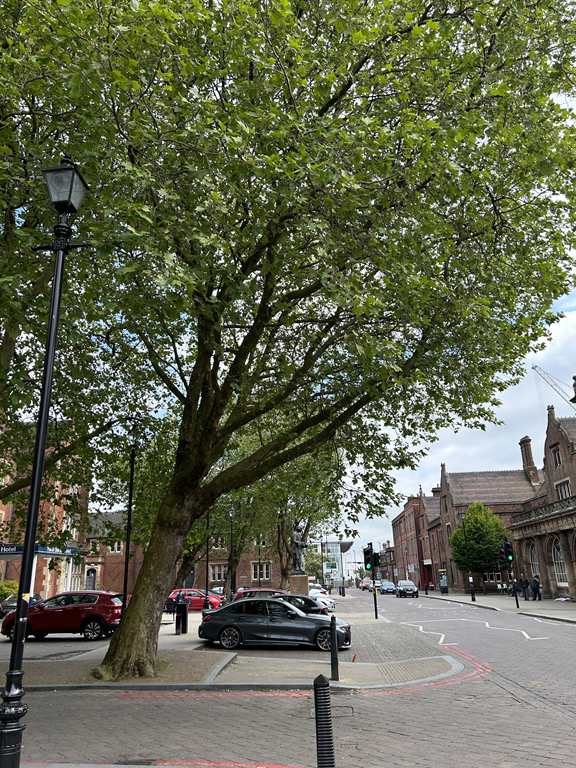
Station_Road_looking_west_towards_Winton_Square
Street Signs

The schemes on Station Road and College Road aim to promote active travel across Stoke-on-Trent.  They are designed to make it safer, quicker, and easier to walk and cycle between key arrival and destination points in the city. They will also link into other schemes connecting to Shelton New Road, Newcastle, and the city centre.

Together, the schemes aim to increase the number of people cycling, improve safe and inclusive access for cycling, contribute to improved air quality, improve health and wellbeing of residents by supporting sustainable and active travel, and support the regeneration and economic growth of the city.

The works along Station Road and College Road include:

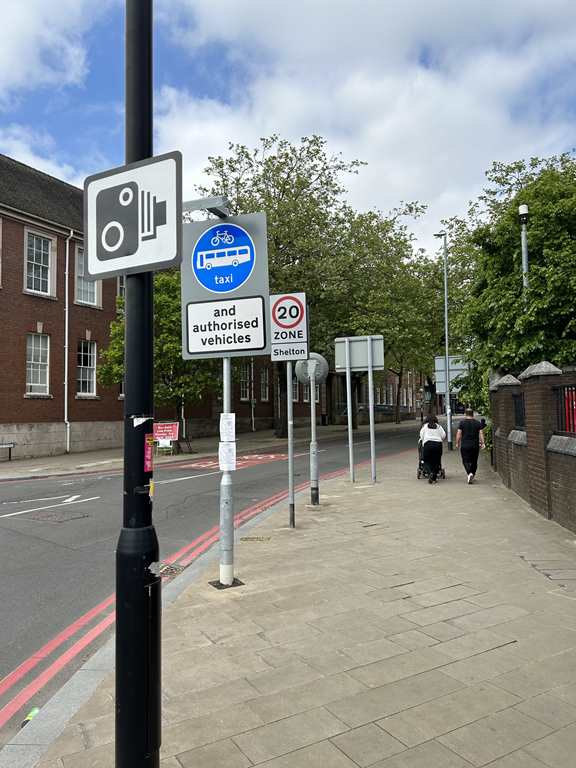
  • A short section of bus gate in front of the station entrance, with access for buses, taxis, and cyclists only.
  • Removal of the roundabout at the junction with College Road to provide priority for buses between the Station and College Road.
  • New zebra crossings over Station Road on each side of the train station.
  • Narrowing of the carriageway to 6m along Station Road from College Road to Leek Road to reduce vehicle speeds and provide more space for pedestrians outside the station.
  • Relocation of the Josiah Wedgwood Statue to the other side of the road in front of the train station entrance, to allow for the carriageway realignment.
  • Removal of on-street parking outside of Federation House to create wider footways for pedestrians.
  • New single-lane approach on Station Road toward the junction with Leek Road, to provide room for wider footway.

The audit team are looking forward to seeing the project complete and returning to site to carry out the Stage 3 Road Safety Audits in the future.

Stoke Train Station

At TMS, we carry out a huge amount of Road Safety Audits each year in the Stoke and Staffordshire area.  If you have a scheme that requires a Road Safety Audit in this region or anywhere else in the country, then please call us on +44 (0)24 7669 0900 or please email Lorna Styring.

(NB: Header Image – Artist impression taken from Station Road Consultation link)

ITAI Crash Demonstration Day

ITAI Crash Demonstration Day

On Thursday 8th June 2023, our Engineers had the opportunity to attend the Crash Demonstration Day in Darley Moor, Derbyshire, organised by the Institute of Traffic Accident Investigators (ITAI). This annual event, known as the ‘ITAI Crash Day,’ offers valuable insights into the consequences of collisions and the resulting damage and injuries. It serves as a platform to observe and understand the sophisticated data associated with various collision scenarios.

Hosted at Darley Moor Airfield and Road Race Circuit, the venue itself holds significance. Situated on a high plateau adjacent to the A515, two miles south of Ashbourne, Derbyshire, the airfield operates under Airways Airsports, providing training in a wide range of leisure flying activities. Originally a Second World War runway, it has transformed into Darley Moor Racetrack, primarily catering to motorcycle races and track days under the management of Darley Moor Motor Cycle Road Race Club.

Presentation in Conference
Crash Test Collision (2 Car Collision)

During the Crash Day, staged collisions were meticulously conducted under controlled conditions, allowing our staff to witness the impact first-hand in a safe environment. After each collision, they had the opportunity to inspect the damage up close. Multiple video recorders and overhead drones documented the collisions, enabling forensic collision investigators to thoroughly analyse the scenes. Spectators were then provided with the findings, including information on the speed, weight, and speed on impact of each vehicle involved.

Alongside the demonstrations, attendees could explore a variety of trade stands and attend informative seminars throughout the day. The Crash Day proved to be an incredibly interesting and beneficial experience for our staff, as they gained deeper insights into the intricacies of collision dynamics and the sophisticated data that underlies them.

These valuable insights gained during the Crash Day reinforce our commitment at TMS to prevent and mitigate the severity of collisions through our Road Safety Audit and Safety Engineering work. By witnessing the staged crashes, including collisions with traditional lamp posts, passively safe structures, head-on vehicular crashes, high-speed rear-end shunts and side impacts, our engineers observed the significant damage sustained even at moderate speeds.

Particularly impactful were the rear-end shunts, which completely demolished the rear seating area of a car, and the side impact that caused an ambulance to overturn and roll when struck by a large car travelling at high speed.

Crash test red car front end damage

The seminars held during the event also provided an opportunity for our team to stay informed about industry developments, such as e-scooter trials, tyre safety, and in-vehicle safety technology. This knowledge is crucial for our training and continuous learning as we strive to stay at the forefront of our field. Demonstrations like the Crash Day reinforce the importance of our work in promoting road safety and inspire us to further enhance our efforts in creating safer road environments.

Back to top